

Checking up on sick leave


An employee has been sick for a long time and is unsure of when they will return. I am unconvinced of the validity of their absence. What can I do and how do I combat my business being affected like this again?
There are a few options open to you in this instance. When you suspect that a sickness is not genuine, you can consider dismissing an employee for fraud although you will need to show that you have carried out a proper investigation and have reasonable grounds for believing that their actions are false. This can be difficult and costly, involving independent medical practitioners.
Remember that statutory sick pay falls under the auspices of Her Majesty's Revenue and Customs because if you have good grounds for believing that your employee is fraudulently claiming SSP then you could consider contacting HMRC, which may be willing to investigate. An investigation by HMRC is a good way of prompting people to re-evaluate their situations.
Unfortunately, generous sick pay schemes can be exploited by employees whose recovery often coincides with the ending of their sick pay entitlement. If you fall into this category, reducing these for new starters may be the first place to start when trying to reduce the cost of sickness to your business.
If an employee has been off sick for some time then you may have the option of dismissal on medical capability grounds. However, you need to exercise caution with employees who have been signed off long-term sick by a medical professional; you would need to have justifiable grounds for contemplating dismissal and have forewarned the employee that their continued absence may result in dismissal.
Ask your employee for permission to contact their GP - or specialist if they have one - for a report on their condition and how long it is likely to last. Another factor to consider is the Disability Discrimination Act (1995): an employee suffering with long-standing health problems is likely to be considered as disabled under the DDA. In such cases, employers are under more onerous obligations in managing and assisting such workers. Employers must make what are defined as reasonable adjustments to assist an employee's return to work; what is reasonable will depend on many factors, including the size and financial resources of an employer.
Employers should refer to general and occupational health practitioners to establish whether or not an employee is suffering a disability.
You can then invite the employee to a capability meeting to discuss the report and to consider options including whether any reasonable adjustments can be made and the possibility of suitable alternative work.
If the medical evidence supports that they will be incapable of work for the foreseeable future, that no reasonable adjustments can be made, that no suitable alternative work is available and that you have a genuine need to replace the employee on a permanent basis then you should be in a position to give notice of termination on the grounds of capability.
The government does plan to change the current GP's sick notes scheme that is generally unhelpful, providing little detail of an employee's condition. Hopefully, the introduction of the replacement 'fit notes' will assist employers in assessing their employees' health and putting them back to work quickly.
Peter Done, managing director, Peninsula
Only users who have a paid subscription or are part of a corporate subscription are able to print or copy content.
To access these options, along with all other subscription benefits, please contact info@insuranceage.co.uk or view our subscription options here: https://subscriptions.insuranceage.co.uk/subscribe
You are currently unable to print this content. Please contact info@insuranceage.co.uk to find out more.
You are currently unable to copy this content. Please contact info@insuranceage.co.uk to find out more.
Copyright Infopro Digital Limited. All rights reserved.
As outlined in our terms and conditions, https://www.infopro-digital.com/terms-and-conditions/subscriptions/ (point 2.4), printing is limited to a single copy.
If you would like to purchase additional rights please email info@insuranceage.co.uk
Copyright Infopro Digital Limited. All rights reserved.
You may share this content using our article tools. As outlined in our terms and conditions, https://www.infopro-digital.com/terms-and-conditions/subscriptions/ (clause 2.4), an Authorised User may only make one copy of the materials for their own personal use. You must also comply with the restrictions in clause 2.5.
If you would like to purchase additional rights please email info@insuranceage.co.uk
More on Regulation

Which? demands ban on brokers charging high motor APRs
Which? has named and shamed motor insurance brokers charging high interest rates on monthly policies and called for a ban on the practice.

No ‘particular targets’ for insurance regulation simplification, says FCA
Consumer Duty will be a building block for any future work on the simplification of insurance regulations that affect brokers, according to David Geale, executive director of consumers, payments and competition at the Financial Conduct Authority.

FCA kicked off financial year with improved authorisation service bar one outlier
The Financial Conduct Authority has upped its game on authorisation service levels in categories affecting brokers, with improvements in four areas, but one notable outlier where the performance dipped.

FCA alerts of Kent-based broker clone
Quotemetoday.co.uk has made clear it has no affiliation with Quote Me Go as the Financial Conduct Authority has reported fraudsters have been impersonating the Kent-headquartered broker.
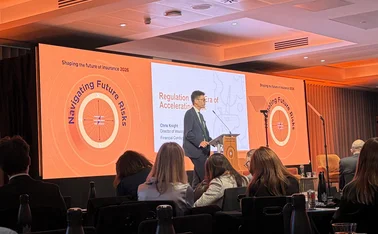
FCA’s Knight updates on cyber insurance report
Chris Knight, director of insurance at the FCA, has updated on the progress of its report into the take up of cyber insurance, and how the regulator has to keep pace with technological advancements.
Growing FCA attestation appetite a warning for brokers
The Financial Conduct Authority has increased the level of attestation requests dished out to insurance firms in recent years, and the serious regulatory tool is one brokers need to keep a keen eye on according to compliance specialists.

Why insurer oversight cannot become another regulatory box-ticking exercise
With regulatory workloads continuing to grow and the FCA maintaining its focus on customer outcomes, Insurance DataLab co-founder Matt Scott explains why brokers need a practical, evidence-led approach to insurer oversight.

FCA cancels insurance distribution business’ permissions
The Financial Conduct Authority cancelled Professional Liability Network’s permission to carry out regulated activities on 11 September 2026.