

May's debate
In May's debate our panellists discussed the issues surrounding broker remuneration and servicing clients
Richard Adams: John Tiner, in a speech on 20 March, reiterated his disappointment that customers are not demanding commission details as is their entitlement. Since then, the British Insurance Brokers' Association has been working to address this and has provided terms of business agreement wordings to help brokers meet Financial Services Authority's approval. The FSA is due to give this market-led solution the nod of approval. What is involved for brokers in amending their TOBAs?
Graham Coates: Our TOBA, even prior to FSA (regulation) has always been clear that customers can have details of commission on request. I do not see any particular need to go above and beyond that. In my recollection, we have never been asked by a client specifically on commission.
Paul Dixon: There is a need to effectively communicate the right to the customer.
Richard Adams: As an insurer, do you advise brokers about how to go about upgrading their TOBAs to be compliant by mentioning the customer's entitlement in their brokers' remuneration levels?
Catherine Taylor: No, we do no actually advise brokers to do that. If a broker is placing business based on who is going to give them the biggest commission, then that is a problem. The most important issue is that we treat customers fairly. If a consumer asks a broker for their commission, then it matters to them, and if they matter to you, tell them.
Richard Adams: John Tiner included in a caveat, some would say a threat, that the FSA may impose compulsory commission disclosure. How serious could the implications of compulsory disclosure be?
Paul Dixon: It is to be avoided at all costs. It is a sanction that has been raised by the FSA as a shot over the bows. If we do not start thinking about this subject seriously, then they will possibly (bring in compulsory disclosure), although it is beyond the brief of the FSA.
Graham Coates: We run the risk of blowing this out of proportion. John Tiner's biggest issue is the question of deal now, detail later, which is contract certainty.
Catherine Taylor: I would like to see the debate move towards the discipline that enables brokers to be able to talk openly with their customers about the full charge for what they are supplying.
Richard Adams: What would be the long-term implications of full disclosure?
Graham Coates: If we end up in a situation where brokers start competing with each other on the amount of remuneration they receive for their services, then if we look at current behaviours in the market, the remuneration will just dip and dip.
Paul Dixon: The route of this question is full disclosure in the sense that it is overt, it takes precedence over the premium and the cover. We will be creating a market where the buyers are only interested in how much commission we are getting; that is complete nonsense. The FSA does not believe that this would be helpful to the customer's position. Customers do not care what the broker makes so long as it is not more expensive than the competition.
Graham Coates: We run claims binders on behalf of a number of insurers and, therefore, we have the cost of employing and maintaining a claims department. If we had to compete with other brokers on the basis of commission levels, we would soon find it uneconomical to keep that claims department. It is almost unthinkable for a large insurer to provide that level of service.
Catherine Taylor: In the past four years I have been with Ecclesiastical, I can remember maybe once being asked about the commission level by the broker before the placing decision. For an industry that gets a lot of stick for the way that it sets charges, it is an extremely professional environment. Provided the broker is able to demonstrate value for money, there should be no fear.
Richard Adams: What can brokers do to maximise remuneration in the current environment - a softening market and increasing commoditisation and competition? One example is charging fees and Biba is a keen advocate of this. How difficult is it to move existing clients onto a fee basis? Is the reward worth the effort?
Graham Coates: It is not necessarily difficult, the difficult bit is getting it right and understanding your cost base. Also, being able to calculate accurately the level of fee you should be charging. In a soft market, you often see brokers competing on price and that will involve both the commission and the fee - they both seem to be negotiable independently. In a soft market, at the smaller end of the market, most remuneration to brokers is on a commission basis, and income will go down as the premiums go down. It could be in the broker's interest to move to a fee basis where appropriate - it gives you a guarantee of your commission through the cycle.
Richard Adams: And when you say where appropriate, I am assuming that it is for a certain level of premium and above?
Graham Coates: It depends on each broker's portfolio. There will be a certain block of clients and particularly if a broker deals with a broad spread of smaller clients, paying premiums, say under £5000, that you tend not to have those detailed negotiations with clients about fees. With the more sophisticated buyers with the larger spend, then there could be grounds there for discussing a fee rather than commission. We are seeing that trend in our business.
Paul Dixon: It is easy (to move customers from a commission to fee basis) but it is fraught with danger. There can't be a broker out there who does not agree with the view that you are likely to make more money sticking with commission over the medium-term than migrating business over to a fee basis. As soon as you identify two costs to the client, you have got two sets of negotiation. You leave yourself open to somebody else coming along because he is told by the customer that the fee is a certain amount, and they will match the premium and undercut your fee. I am not convinced that fees are the right thing for the industry.
Catherine Taylor: Moving from commission to fee income is a cultural thing. I deal with a number of brokers which deal with fees only and very successfully. They have the trust of the client. They have built that trust into the brand and what they do. It is not easy but is something we need to consider. However, in a soft market, those smaller brokers who are relying on commission only are probably struggling and need some support.
Richard Adams: How do brokers know that they are charging the right amount? How do you recommend brokers ensure that they calculate the right charges?
Catherine Taylor: It comes back to understanding their own costs. No matter how small the broker is, you should understand what drives the cost in your business and the efficiencies. Some brokers need to sometimes say we are not making any money out of this relationship. It is not just about the brokers' costs - the insurer has to be more efficient.
Paul Dixon: Insurers would like to see more of their net premiums out in the market rather than having them messed up with commission. We sell your products and you (the insurers) should pay us.
Graham Coates: The broker works for both sides and the insurer would get the distribution element for free if we moved totally to a fee basis. If we do move to more of a fee based regime, the brokers need to understand their costs better. Some of the larger brokers may follow the model of accountants and solicitors which charge an hourly rate for the time of directors and employees dependent on their seniority and their own costs. If you are a senior director, who is going out to see a client and service that client, you would expect the fee to be two or three times that of a junior executive.
Richard Adams: I want to ask about cross-selling, I have seen statistics suggesting the average number of policies brokers' clients hold through them is 1.1, which seems low. I wanted to ask the panel why they think brokers do not seem to be capitalising on this opportunity to boost remuneration, and do they have any tips on how they can do this successfully?
Catherine Taylor: They should recruit the best people they can afford and for passion and attitude.
Graham Coates: It is not just selling one policy and then another and then another, it is looking at the overall service we provide. Brokers need to think these days more in terms of being a risk manager in the round, rather than just selling insurance policies. If you look at it from that point of view, there are many other services you can, and brokers sell.
Paul Dixon: I have a lot of time for the approach that brokers take in their attempt to cross-sell. Perhaps the message here is that more can be done and to rethink the way you market at renewal.
Richard Adams: Do you think that over-servicing is a common problem for brokers, does there need to be more business discipline?
Catherine Taylor: If you put your customer at the heart of the business, and understand what they want, then you should be able to gauge it right.
Paul Dixon: You can find that part way through the year, there is a large claim that requires, at the insistence of your customer, your attention on a regular basis that will distort the income and the value of that client. Any number of other complications can arise from higher maintenance and unforeseen client relationships. A predictable service level is a tricky thing to identify with commercial business.
Graham Coates: The service provided by some of the major insurance companies is a greater issue. I see a lot of evidence of over-servicing relative to what is needed because of the fire fighting that brokers have to do to compensate for the lack of service from some of the big insurers.
Richard Adams: I wanted to ask about brokers taking on more work for the insurer via delegated authority. What criteria do insurers look for before handing over some controls to the broker?
Catherine Taylor: We need to have an agreement of minds and an aligned strategy as to what the interests are and where the expertise lies. It depends very much on the class of business as well. An insurer is not going to hand over the reins unless they are convinced the broker has the ability and the expertise, and the resource capabilities to do the job. They are normally happy to do that in the right set of circumstances and hopefully, they will remunerate appropriately.
Graham Coates: There is a great deal of crossover these days between the skill sets and competencies within brokers. In certain instances, issuing of documents, settling of small claims, they are actually better placed to respond. We need the right skills, a sound business model, to be professionally run, and the ability to meet any auditing requirements of the insurer.
Richard Adams: What is your advice to brokers that are looking to do a bit more work for the insurer to stabilise their future remuneration?
Paul Dixon: The delegated authority approach is fantastic and an increasing trend. It positions the insurer where for the most part they should be, which is the capacity provider. It helps to emphasise and focus on the individual broker's strength and niche offering. Whether we like it a lot or not, and I don't, the issue of remuneration is on the table and we need to begin to get a little bit more serious about how the market handles it. We also have to look at it from the customer's perspective. I have a concern that we should be considering market based changes, particularly as we are now in a market where we have an 'us and them' situation with various distortions within that model. The 'us' being the smaller independent brokers and the 'them' being the large network brokers who, for the same policy, would earn twice the commission. Is it right for large brokers to wield such awesome power with insurers, are we not in fact again guilty of potentially unbalancing the market? I am concerned these wildly distorted commission levels are not in part driven by market forces but instead influenced simply by the huge power in the hands of a small number of people.
THE PANEL
- Richard Adams, Editor, Professional Broking magazine
- Paul Dickson, Chief executive, Dickson Insurance
- Graham Coates, group operations director Stuart Alexander
- Catherine Taylor, Underwriting manager, Ecclesiastical, Birmingham
Hear this debate in full, and previous debates, by accessing the archive on the website at www.brokermanagementforum.com
Membership is free. Register online now to secure your place in next months's event on 'claims and the broker'.
Only users who have a paid subscription or are part of a corporate subscription are able to print or copy content.
To access these options, along with all other subscription benefits, please contact info@insuranceage.co.uk or view our subscription options here: https://subscriptions.insuranceage.co.uk/subscribe
You are currently unable to print this content. Please contact info@insuranceage.co.uk to find out more.
You are currently unable to copy this content. Please contact info@insuranceage.co.uk to find out more.
Copyright Infopro Digital Limited. All rights reserved.
As outlined in our terms and conditions, https://www.infopro-digital.com/terms-and-conditions/subscriptions/ (point 2.4), printing is limited to a single copy.
If you would like to purchase additional rights please email info@insuranceage.co.uk
Copyright Infopro Digital Limited. All rights reserved.
You may share this content using our article tools. As outlined in our terms and conditions, https://www.infopro-digital.com/terms-and-conditions/subscriptions/ (clause 2.4), an Authorised User may only make one copy of the materials for their own personal use. You must also comply with the restrictions in clause 2.5.
If you would like to purchase additional rights please email info@insuranceage.co.uk
More on Regulation

Which? demands ban on brokers charging high motor APRs
Which? has named and shamed motor insurance brokers charging high interest rates on monthly policies and called for a ban on the practice.

No ‘particular targets’ for insurance regulation simplification, says FCA
Consumer Duty will be a building block for any future work on the simplification of insurance regulations that affect brokers, according to David Geale, executive director of consumers, payments and competition at the Financial Conduct Authority.

FCA kicked off financial year with improved authorisation service bar one outlier
The Financial Conduct Authority has upped its game on authorisation service levels in categories affecting brokers, with improvements in four areas, but one notable outlier where the performance dipped.

FCA alerts of Kent-based broker clone
Quotemetoday.co.uk has made clear it has no affiliation with Quote Me Go as the Financial Conduct Authority has reported fraudsters have been impersonating the Kent-headquartered broker.
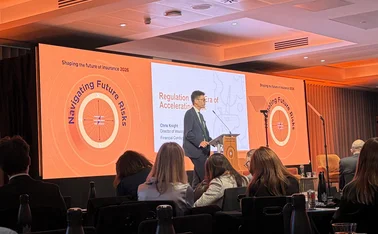
FCA’s Knight updates on cyber insurance report
Chris Knight, director of insurance at the FCA, has updated on the progress of its report into the take up of cyber insurance, and how the regulator has to keep pace with technological advancements.

Growing FCA attestation appetite a warning for brokers
The Financial Conduct Authority has increased the level of attestation requests dished out to insurance firms in recent years, and the serious regulatory tool is one brokers need to keep a keen eye on according to compliance specialists.

Why insurer oversight cannot become another regulatory box-ticking exercise
With regulatory workloads continuing to grow and the FCA maintaining its focus on customer outcomes, Insurance DataLab co-founder Matt Scott explains why brokers need a practical, evidence-led approach to insurer oversight.

FCA cancels insurance distribution business’ permissions
The Financial Conduct Authority cancelled Professional Liability Network’s permission to carry out regulated activities on 11 September 2026.