

Feeling the pinch
It is forecast that, in 2005, compliance will remain top of the agenda as brokers adapt to the new Financial Services Authority regulatory regime and the resulting squeeze in profits. Nicolle Farthing reports on some of the other predictions for the year ahead
The introduction of regulation of general insurance mediation from 14 January 2005 went smoothly, according to the Financial Services Authority, which has taken responsibility for regulating around 40,000 firms.
The total number of directly authorised firms able to conduct general insurance business is 18,130 - with 13,291 new authorisations and 4839 variations of permission. In addition, authorised firms had about 22,000 appointed representatives.
Applications from more than 900 firms are still being processed and these firms can continue to sell or arrange general insurance on an interim basis until a final decision is reached on their application. Firms granted interim authorisation are still subject to the full FSA Handbook of Rules and Guidance, but are excluded from the Financial Services Compensation Scheme. A firm with interim authorisation must disclose its status to a customer and point out the non-availability of the FSCS.
It is illegal for firms that did not submit complete applications to the FSA by 13 January to continue doing business. A spokesperson for the FSA says it is pleased with the response from general insurance brokers and that numbers are in line with expectations. However, there is still concern that a large number of secondary intermediaries have failed to become authorised. It is estimated that hundreds of car dealers, vets and property managers that used to sell insurance products failed to apply.
This business is expected to be picked up by direct insurers and general insurance brokers.
Going forward, the FSA has promised to enforce the perimeter of the new regime and crack down on any firms that may consider continuing with unauthorised and illegal selling and arranging of insurance.
Cost of regulation
For those that are regulated, the work has only just begun. In a survey by information solutions provider Docucorp, 96% of senior management within the industry believe many firms are not compliant. The survey of more than 200 general insurers and brokers reveals that many believe large numbers of firms were authorised by the FSA without having put in place the procedures required to comply with its new rules.
The Docucorp survey also reveals that 92% of insurers believe the FSA has underestimated the cost to the industry of implementing the new regulatory requirements.
Eric Galbraith, chief executive of the British Insurance Brokers' Association, says that the cost of regulation will hit brokers' profits. He predicts that a number of brokers will look at increasing their fees or charging additional fees to cover the cost of regulation. He warns: "Intermediaries are seeing their profit margins squeezed and, when this is the case, there is usually a lack of money to put into researching and developing new business."
The latest quarterly survey by the Confederation of British Industry and PricewaterhouseCoopers found that there has been further deterioration in business confidence among insurance brokers. Its balance statistic measuring overall optimism fell from -17% to -22% in the last quarter.
This reflects the continuing decline in profits and a lower-than-expected increase in business volumes.
Business volumes increased slightly over the past three months and are expected to be broadly stable over the next three months. Profits continued to fall, reflecting the largest fall in average fees and commission since December 1998, as well as further rises in both total and average costs.
Profits are expected to be eroded further during the next three months.
The number of people employed by brokers increased for the fourth successive survey and is predicted to rise further in the next quarter. Training expenditure and staff costs also continued to increase due to the impact of regulation by the FSA according to Ian Dilks, partner in audit of PwC.
In addition to the cost burden, Galbraith argues that the regulatory requirements could stifle new start-ups. He says: "We have seen some new brokers, but these tend to be consolidators backed by venture capitalists to acquire existing brokers. This may be an issue going forward as there will be fewer and fewer brokers."
Venture capitalists have become increasingly interested in pursuing opportunities within insurance markets. However, they tend to look for competitive, well-established brokers that have ambitious development plans and can deliver high returns rather than funding start-ups from scratch, according to Debbie Clarke, director of corporate finance at Mazars.
However, Ten Broking Services offers a solution. In a newly launched venture, Ten aims to offer small brokers and account executives the opportunity to run their own brokerage, while outsourcing their IT and insurer agency needs to Ten.
Kedric Rhodes, managing director of Ten, says: "This is an industry with no new entrants from the bottom up and, as a result, it will not survive in the long term. Ten can help brokers draw up their own business plans and set-up does not require a large investment. For example, account executives could start up in their spare room as they did in the past - all they need is an office and a computer with a broadband internet connection.
"We believe that people want to deal with people. We are offering the reverse of consolidation, bringing in more independents at the front end.
"There have been many reports about insurers and banks being a threat to commercial brokers' business through direct offerings, however, these reports are wrong. The direct offerings will not take hold as people want to deal with people."
In 2005, the number of broker acquisitions is likely to increase as the value of regulated firms improves. Oliver Laughton-Scott, managing principal of IMAS Corporate Advisers, believes merger and acquisition activity was muted last year as brokers concentrated on FSA regulation. He says: "We will now see an increase in activity. This will not necessarily be at the bottom as these brokers cannot afford to sell. Larger brokers will take a more strategic view, aligning themselves into larger entities. However, as deals take a long time to complete, we will not necessarily see a great burst early in the year."
Public image
It is important to encourage young people - in particular graduates - into the broking industry, according to Galbraith. BIBA is looking at ways to promote the industry and this year's BIBA conference aims to offer more for younger members. He says: "We already have more than 100 stands and have secured a wider range of speakers. In addition to the regular delegates, we want to attract new people, in particular, our younger members."
Galbraith argues that improving the reputation of the industry is crucial.
He is keen to establish a joint initiative with the Association of British Insurers to raise the profile of the industry. He says: "There has been enough talk about its poor public image, now it is time to take action. I hope to see some joint initiative with BIBA, the ABI and other stakeholders this year that will demonstrate the benefits brought by the industry and help to maintain our leading position."
BIBA will continue to improve the industry's profile with the government and Galbraith says he hopes that there will be continued consultation on such issues as liability insurance and uninsured drivers over the coming year.
The CBI survey revealed that confidence among general insurers improved as the statistic measuring overall optimism rose to +18% from -50% in September 2004. Respondents reported a fall in premium income during the past three months, while investment income has increased and operating costs and claims have decreased.
Dilks says: "Looking forward, insurers are - perhaps surprisingly, in view of recent comments regarding a softening market - expecting premium income to increase. Costs are expected to continue to reduce, while a benign claims environment is also expected to continue, with little change expected in the value of claims.
"Profitability appeared to hold up well, supporting more optimistic forecasts that good profitability will last for longer in this cycle than has historically been the case in the UK."
Financial risk in 2005
The FSA report Financial Risk Outlook 2005 states that, while general insurers' results confirmed that the industry returned to profitability in 2003, conditions remain challenging. In 2004, investment returns are likely to have continued to improve, however insurance premiums softened further in most lines.
According to the report, in personal lines, motor insurance rates have weakened the most. With claims growing by an average of 5%, the profitability of motor could come under pressure. Home contents and building insurance premiums also appear to be flattening.
The report states that commercial lines have seen a degree of premium-rate softening varying by product line. The most significant softening is in aviation and energy classes.
Laughton-Scott said: "With regard to commercial, the weakening of rates has been relatively muted. The big change for the UK commercial sector is the impact of insurers setting up call centres in India and trying to do what they have done with personal lines to commercial. This could impact on small risks."
The FSA report highlights concerns about insurers' underwriting controls in a softening market. However, it believes its new capital-assessment regime should trigger more careful approaches, as firms have to make a realistic assessment of the risks in their business and the associated capital needs over the course of the underwriting cycle.
The report also highlights emerging risks in the long term, which include climate change and the impact of more extreme weather, the threat of terrorism and long-tail liabilities such as claims from asbestos.
With the market expected to continue to soften across most sectors, and as the cost of regulation further eats into broker profits, it will be a tough year for brokers. However, Galbraith says: "All our broker members have been working hard to be ready for regulation and will continue to work hard as it is not something that happens overnight. We now have the regulatory structure in place to improve the profile and professionalism of the industry. It is important now to get back to basics and get on with running the business."
RISK - KEY CONCERNS
- The cost of motor insurance declined at the fastest pace since July 1996 in the third quarter of 2004, contracting by 2.9% for comprehensive cover in annualised terms. AA
- Twelve per cent of farmland and areas inhabited by 10% of the population in England and Wales are now likely to flood one or more times every 100 years. Environment Agency
- Weather risks for household and property insurers are increasing by 2% to 4% per year. ABI
- UK asbestos-related claims could reach £20bn over the next 30 years, half of which might fall to UK insurers. Actuarial Profession
- UK liability claims grew at an annualised rate of 8.8% during the last 20 years, ahead of nominal gross domestic product growth of 6.7% per year during the same period. Swiss Re
- Fraud on motor, travel and home insurance is estimated to cost the industry around £1bn every year, with 6% of claims being exaggerated and 2% invented. ABI
Source: FSA Financial Risks Outlook 2005.
Only users who have a paid subscription or are part of a corporate subscription are able to print or copy content.
To access these options, along with all other subscription benefits, please contact info@insuranceage.co.uk or view our subscription options here: https://subscriptions.insuranceage.co.uk/subscribe
You are currently unable to print this content. Please contact info@insuranceage.co.uk to find out more.
You are currently unable to copy this content. Please contact info@insuranceage.co.uk to find out more.
Copyright Infopro Digital Limited. All rights reserved.
As outlined in our terms and conditions, https://www.infopro-digital.com/terms-and-conditions/subscriptions/ (point 2.4), printing is limited to a single copy.
If you would like to purchase additional rights please email info@insuranceage.co.uk
Copyright Infopro Digital Limited. All rights reserved.
You may share this content using our article tools. As outlined in our terms and conditions, https://www.infopro-digital.com/terms-and-conditions/subscriptions/ (clause 2.4), an Authorised User may only make one copy of the materials for their own personal use. You must also comply with the restrictions in clause 2.5.
If you would like to purchase additional rights please email info@insuranceage.co.uk
More on Regulation

Which? demands ban on brokers charging high motor APRs
Which? has named and shamed motor insurance brokers charging high interest rates on monthly policies and called for a ban on the practice.

No ‘particular targets’ for insurance regulation simplification, says FCA
Consumer Duty will be a building block for any future work on the simplification of insurance regulations that affect brokers, according to David Geale, executive director of consumers, payments and competition at the Financial Conduct Authority.

FCA kicked off financial year with improved authorisation service bar one outlier
The Financial Conduct Authority has upped its game on authorisation service levels in categories affecting brokers, with improvements in four areas, but one notable outlier where the performance dipped.

FCA alerts of Kent-based broker clone
Quotemetoday.co.uk has made clear it has no affiliation with Quote Me Go as the Financial Conduct Authority has reported fraudsters have been impersonating the Kent-headquartered broker.
FCA’s Knight updates on cyber insurance report
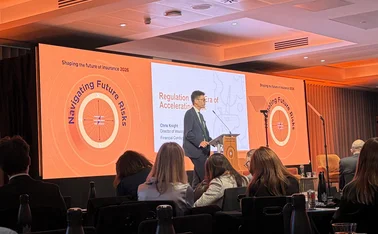
Chris Knight, director of insurance at the FCA, has updated on the progress of its report into the take up of cyber insurance, and how the regulator has to keep pace with technological advancements.

Growing FCA attestation appetite a warning for brokers
The Financial Conduct Authority has increased the level of attestation requests dished out to insurance firms in recent years, and the serious regulatory tool is one brokers need to keep a keen eye on according to compliance specialists.

Why insurer oversight cannot become another regulatory box-ticking exercise
With regulatory workloads continuing to grow and the FCA maintaining its focus on customer outcomes, Insurance DataLab co-founder Matt Scott explains why brokers need a practical, evidence-led approach to insurer oversight.

FCA cancels insurance distribution business’ permissions
The Financial Conduct Authority cancelled Professional Liability Network’s permission to carry out regulated activities on 11 September 2026.