

Punching above your weight
There are some attractive benefit options available for staff working in small-to-medium sized firms. David Rowley examines how technology and 'stack 'em high sell 'em cheap' deals are helping SMEs compete with big employers
Gloom and circumspection were the watchwords two years ago when examining how small to medium-sized employers could compete on benefits with larger employers.
Now the sector seems much more upbeat, especially when talking to some of the smarter consultancies that have put together some slick outsourced packages. They may not be as bespoke as those of larger employers, but they are not a million miles off.
Typically, packages offered by consultants such as Jardine Lloyd Thompson and Gissings offer access to a range of pre-chosen benefits bought in bulk at favourable rates, together with total reward statements, online benefits administration with the option of flex, consultancy and communication. There is bullish talk from these firms too.
Paul Clark, head of employee benefits at JLT, said: "The administration has effectively gone out of benefits to a large extent at the moment. With some of the larger SMEs we are finding that all of the administration around benefits can be outsourced by moving to a flex-type approach."
Things get even rosier if you follow the regularly cited line that SMEs have the potential to communicate their benefits more easily. The logic is that where everyone is in the same building and knows the senior staff, messages are filtered around much more easily. This closeness gives HR and benefit champions an easier ride and can help in working out the most appropriate benefits for staff, too.
Dan Nugent, director at P&MM, the voluntary benefits and salary sacrifice provider, said that for this reason the biggest take-up he has ever seen was a client with 200 employees.
Nugent commented: "Being an SME in many cases means having a better understanding of the unique DNA of the organization. They may be able to identify, for instance, the cycling enthusiasts among the group for a bike-for-work scheme. The obvious thing to do would then be to bring them onside to support the benefit. An organisation of 20,000 employees is going to find it harder to identify those individuals."
Ironically for SMEs it has been the growth in benefits at big employers that have brought in flexible packages that has spurred on consultants to create an off-the-shelf equivalent.
Usually, these all-in-one packages have a total reward statement at their heart that blares out the value of the benefits procured at discount rates due to bulk purchasing. The alternative would be to buy these benefits at a more expensive rate for each employee than a big employer would consider paying.
Why any employer with under 250 employees would choose anything different would be hard to fathom, though as some point out, not all consultants are as clued up as the likes of JLT and Gissings, and not all SMEs are offered such deals by their advisers. This is a sweet arrangement for the consultants as it means they negotiate benefits en masse. The only drawback for clients is that they are limited to a list of preferred or, 'best of breed' providers chosen by the consultant.
Annika Haslett, head of flexible benefits at Gissings, said: "We have partnered with P&MM to gain access to benefits at market-level prices and the providers are put through due diligence and market reviews on a regular basis. This is done only once every two years rather than every time a client wants to introduce a new benefit, so it is good economy for us as well as our clients.
"We still approach each client as a unique entity. There are component parts that are pre-determined, but they still have the opportunity to select within those."
The beauty of this one-stop approach to benefits is not just the economies of scale in administration, as it means also that reporting can be combined rather than separated for each benefit. In effect, the employer has a big database of who gets what.
The one-route approach also allows cost-effective communication for employers and clients. The consultant can now send out messages en masse to all their clients for important announcements.
The way firms such as Gissings and JLT are upping the stakes is going to force others to match them, as the all-in-one services they offer are not replicated by all of those serving the SME market.
RISK PROTECTION
Michelle, an adviser to SMEs at Cracknell Origen, recalls the time when she was once part of a 70-employee firm where key man insurance was used to cover fee-winning directors, a few of whom subsequently made calls on the cover.
"These people had a huge responsibility for bringing in income," she said. "The cover gave them the space to recover fully rather than rush back to work, which could be fatal."
Key man cover pays out a lump sum to the firm, which allows it to maintain salary for the employee while they are off sick, but also compensates the firm for any loss of revenue. The premium for such insurance depends on what illnesses are covered.
The need for such benefits to be evidently cost neutral is a key theme among SMEs, according to Simon Bailey, head of marketing for employee benefits at Aegon. It is with this in mind Aegon Scottish Equitable has created its Employee Protection Menu, a mini-flexible product that lets employees choose a mixture of life insurance, income protection and critical illness insurance. However, whatever the choice, the cost is still the same for the employer.
These products can be more highly valued in the family-like environment of an SME, where the financial hardship posed by long-term illness might be felt more acutely.
Beyond health, Bailey also makes a universal point about SMEs: "They want to provide very visible benefits that employees can see and benefit from now, as opposed to when they are six feet under ground, and they want to reward the right behaviour in an instantaneous way. I was talking to one employer that said that he would rather give my employees a bag of doughnuts on a Friday afternoon than a policy they are not going get sight of, because that shows the manager is doing something and recognising the right behaviour."
SME PAY LEVELS
SMEs often remunerate over the odds in pay terms and then undersell this to their employees, according to a pay consultant.
Deborah Rees, reward consulting director at Innecto, said: "Smaller employers often pay upper quartile but that has to be communicated. If staff members do not really value it then you are wasting money. " She adds that, while some SMEs will offer high pay in lieu of benefits, this is not good policy for those with over 250 employees, as they will be able to negotiate attractive benefits deals."
FLEXIBLE BENEFITS
Current estimates put the number of employers offering flexible benefits to its staff at between 15 and 25%. There is no authorative survey on this, but it is widely accepted that many more employers are anticipating launching flex in the future.
In its purest sense, flex means the ability of employees to choose what benefits they end up with. Often, this means employees are given an annual pot of flex money they can spend on a range of benefits. Employees are also usually given the option to have less of one of their core benefits, enabling them to have more of others. This may mean dropping from four times life cover to three times life cover and increasing pension contributions instead. These changes happen online, though a few old-fashioned 'paper' schemes still exist.
There are two other key facts worth noting. Employees tend to jump at the chance of dental cover when it is offered as a flex benefit. Also, it can help facilitate salary sacrifice on benefits like pensions. The company's NI savings in this area are often used to help pay for the flex's initial set up.
Only users who have a paid subscription or are part of a corporate subscription are able to print or copy content.
To access these options, along with all other subscription benefits, please contact info@insuranceage.co.uk or view our subscription options here: https://subscriptions.insuranceage.co.uk/subscribe
You are currently unable to print this content. Please contact info@insuranceage.co.uk to find out more.
You are currently unable to copy this content. Please contact info@insuranceage.co.uk to find out more.
Copyright Infopro Digital Limited. All rights reserved.
As outlined in our terms and conditions, https://www.infopro-digital.com/terms-and-conditions/subscriptions/ (point 2.4), printing is limited to a single copy.
If you would like to purchase additional rights please email info@insuranceage.co.uk
Copyright Infopro Digital Limited. All rights reserved.
You may share this content using our article tools. As outlined in our terms and conditions, https://www.infopro-digital.com/terms-and-conditions/subscriptions/ (clause 2.4), an Authorised User may only make one copy of the materials for their own personal use. You must also comply with the restrictions in clause 2.5.
If you would like to purchase additional rights please email info@insuranceage.co.uk
More on Broker

Momentum AR outlines challenges of launching his first business
A new Momentum Broker Solutions’ appointed representative has outlined the challenges he has faced setting up his own business for the first time and why he made the leap.

People Moves: 24 – 28 August 2026
Follow the latest personnel moves in insurance.

Biba and Markel AI Academy opens for applications
Members of the British Insurance Brokers’ Association can now apply to join the founding cohort of the AI Academy being offered in partnership with Markel.
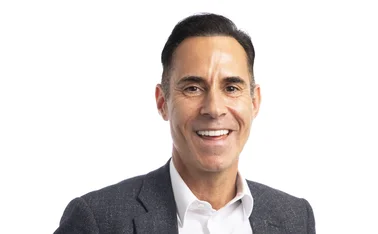
Broking Success: Vista Insurance Brokers’ CEO Gavin Ruben – leader of PE niches
Gavin Ruben, CEO of Vista Insurance Brokers, has set out the goal of becoming the leader of its specialist mergers and acquisitions insurance niche, along with the other parts of the firm’s 2035 ambitions.
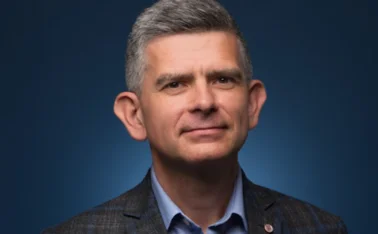
Blog: AI fraud is becoming a broker problem, not just an insurer problem
AI-generated documents extend the risk of fraud beyond claims settlement to the application and quote stages. Oleh Petrivskyy, founder and CEO of Binariks, explains why insurance distribution needs its own authentication mechanisms and offers four low-cost steps brokers can start with now.

Lockton brings in ex-Aviva and Gallagher leader Piper
Louise Piper has joined Lockton as a placement director in its major accounts business, working across large and complex clients.

Liquidators reveal estimated £9m hole at broker Anthony Jones
The liquidators of Kent-based Anthony Jones (UK) have released a statement of affairs estimating a £9.22m deficit, with numerous insurance businesses and HMRC facing potential losses, some as high as six figures, after the collapse of the broker.

Ardonagh reveals advisory growth in year of Everywhen name switch
Ardonagh Advisory grew income by 4.7% in 2025, the year it switched name to Everywhen, a filing at Companies House has revealed.