

Professional Broking Broker Managment Forum
The latest Professional Broking Broker Management Forum examined the issues surrounding commercial insurance fraud and asked how brokers can manage fraud as part of their overall business strategy. Alex Broad reports
Alex Broad: There is not a lot of consensus on the figures relating to fraud, not least because it often has to be estimated. Association of British Insurers figures put the cost of fraud at about £1.4bn, other research at £550m, and so on. But fraud is clearly costing the insurance industry hundreds of millions of pounds a year and the overall cost to the UK was recently estimated to be at least £16bn. How big a problem is commercial insurance fraud in the UK and are we just scraping the surface with these figures?
Mike Boon: We were involved in the survey that put the commercial fraud figure at £550m. That was based on information that the survey itself gathered, combined with information that the ABI sourced from individual insurance companies. It is never going to be perfect but it is probably as accurate as we are able to get and it certainly indicates that it is a significant problem and equates to a good 5% I think, calculated in terms of total premiums. So, it is not insignificant if you were to think of that as a tax.
Alex Broad: Why should fraud be on the radar of UK insurance broker managers?
John Freeman: I think the very nature of fraud is such that brokers need to understand that fraudsters are incredibly high maintenance, so it is in their interest to try to stop it at the outset.
Mike Boon: There are issues of cost and there are issues of it being important in terms of regulation and the Financial Services Authority. But I think those of us in the insurance business need to recognise that, when we entered insurance, we came into a fairly special industry in which we are guided by certain basic principles. They include the duty of utmost good faith, which goes to the heart of the insurance contract, and also the concept that the majority are sharing the risk of the unfortunate minority. And, if we think of insurance fraud in terms of those two issues, then you can see it totally flies in the face of that whole basis of insurance.
Alex Broad: Robert Harvey from Martin Harvey and Co. says we deal with general insurance and believe that we are fairly safe from fraud, however, are there any areas in which we might be vulnerable without realising it? That might be quite difficult to answer without closer examination of his business and its systems, but would anyone like to take that one?
John Freeman: Yes, I would be interested in how Robert managed to validate the statement that he is "safe from fraud in the general area". That issue aside, I think this is a problem because people tend to think about fraud generally in the claimant area, there is a lot of publicity around it. But there are many other aspects of fraud that we all have to pay attention to. And it can come down to something as simple as employee referencing, you know, the people that we are employing - are they who they say they are? And we have to look internally as well as at claimant fraud. If you compartmentalise your strategy when it comes to fraud, you do not actually have a strategy. So you have got to join all of these segments together and develop an overall policy.
Alex Broad: At what stage do you think brokers should be expected to detect fraud? Are there any particular fraud indicators, for example, that might be useful?
John Freeman: When does fraud occur? Is it only at the claims stage? Or the claim notification stage? I think the industry has learnt that it can happen at any time during the course of a policy, be it at inception, intimation of a claim, when the documentation that comes in, an so on. So we must be vigilant throughout the entire life of the policy rather than focusing in one particular area.
Mike Boon: I would just say - and there is nothing new here - know your customer. And I think brokers are in a very special position there. We may have dealt with the policyholder previously, but it will be very rare that we have the real understanding of the client - the policyholder - that brokers have. And, if you are really in a position to do that, you can identify the unusual behaviour perhaps at the time of the claim. You can also make sure that you do undertake some reviews when somebody is coming to you for brand new business and that you have got some understanding of where they have come from. And I think the 'knowing your customer' part is crucial to that.
Alex Broad: David McKay from NWN Insurance Brokers asks: What can brokers do to identify fraud and how should they deal with it? He says, in the past, he has raised issues with insurers and they have not wanted to know.
John Freeman: I would applaud David and it really is frustrating if he has actually raised issues and the insurers have not picked them up. I wonder when that was, because the industry has changed an awful lot in the last few years. A lot of investment has been made with regard to training and, again, creating this culture of fraud awareness.
Mike Boon: There is a need to continue with that. I think there is also a benefit in knowing, if you place a significant amount of business with a particular insurer, who their fraud people are. Because most, if not every insurer, nowadays has a fraud unit of some sort or other. And, if you know in advance who it is, then you can perhaps bypass - if you need to - the people with whom you deal on a day-to-day basis and say: "Hey, you know, you really need to take notice of this claim and look at it more closely." As loss adjusters we sometimes receive a tip-off directly from a broker or it comes to us with a tip-off from the insurance company. So I can understand the frustration, it does happen occasionally, but there are plenty of instances where the brokers are listened to and can make a significant contribution.
David Grant: One of the things we are looking at to help brokers in our claims area is the possibility of setting up some web pages with information on fraud. Also, that will allow them a route to an actual contact to actually pass that information on to. So we are looking to make sure that kind of communication is improved.
John Freeman: Most investigators recognise that, often, the broker has more up-to-date information than the insurance company. And that comes back to my original point that the commercial insurance fraud survey revealed that most businesses trust their brokers more than they trust the insurers. And I am hoping that the insurance industry will recognise that fact and embrace brokers in the first-line defence against fraud. And I am encouraged by what David has just said there, that is the sort of action we need.
Mike Boon: There is also a need for individual businesses to make sure they have some sort of strategy in place. I think if a broking firm is willing to make a policy statement - this is what we think about fraud, these are the dangers, these are the risks, this is what we think we should do - I think that counts for a lot and your staff will appreciate that. Taking it up to an even higher level, I think there is a need also for co-operation between different parts of the industry. Certainly with the ABI, there is the anti-fraud committee within the loss adjusting arena, the Chartered Institute of Loss Adjusters - John (Freeman) and I are both part of the anti-fraud group there. And you know, there is a good opportunity to liaise with the British Insurance Brokers' Association and other organisations to ensure that we are talking to each other. And again, there are opportunities for communication.
Alex Broad: Simon Hickman from Access Underwriting asks whether the panel agrees that insurance companies are spending too much time worrying about how their complaint figures look to the FSA and not enough tackling fraud?
Mike Boon: The FSA actually has four statutory objectives, market confidence, public awareness, consumer protection and the fourth is prevention of financial crime. So I do not think the FSA will actually be leading insurers away from tackling fraud, far from it. I understand that the Arrow visits that are taking place are very definitely looking at fraud. And the feedback that we are getting is where an insurer has not tackled it as well as they should; the FSA is saying to them, these are the areas in which you now need to improve, so I think that the FSA is actually a positive force in terms of tackling fraud.
John Freeman: A lot of the requirements of the FSA are about having good business practice. My own experience is that this issue that Simon has raised is not actually the case. All the FSA is looking for is a proactive stance and perhaps transparency. We do not really employ smoke-and-mirror tactics any more in the world of investigations. If you are transparent, manage the customer correctly, manage their expectations, you can act in accordance with the FSA guidelines on complaints, and it is not an issue.
Alex Broad: Does the panel believe that the increasing automation of the claims process has increased the industry's susceptibility to fraud?
Mike Boon: It would be easy to say yes, the more you automate it, the more you put it at risk. But automation can, in itself, put in certain controls to prevent fraud as well. And we generally find that, as the market moves forward, you need to put other things in place that are checks and balances. Having said all of that, there will never be a substitute for judgement and training and people having the ability to identify these things and make a judgement on what needs to be done.
Alex Broad: How can broker managers protect their own businesses against fraud?
David Grant: They need to think about what strategy they have with regard to fraud, and what sort of risk control they have in place across the business, not just for fraudulent claims. So, think of it very much as what are the systems and controls that I need to have in place to prevent fraud to my business, whether that is coming from people outside of it such as fraudulent customers or indeed fraud that might take place in the business itself.
John Freeman: Quite simply, your fraud strategy must embrace all the component parts of your business and be embedded in your culture.
Mike Boon: Do not rush to a particular solution. A lot of people are talking about fraud, there is a tremendous amount of coverage in the press, it would be very easy to think that is the solution, that is what I am going to do. Publicise what you are doing within your business, let people know that it is a concern to you and tackle it in that way. And again, seek guidance, seek help from elsewhere because, certainly, insurers and loss adjusters and the like have a lot of experience in this.
Only users who have a paid subscription or are part of a corporate subscription are able to print or copy content.
To access these options, along with all other subscription benefits, please contact info@insuranceage.co.uk or view our subscription options here: https://subscriptions.insuranceage.co.uk/subscribe
You are currently unable to print this content. Please contact info@insuranceage.co.uk to find out more.
You are currently unable to copy this content. Please contact info@insuranceage.co.uk to find out more.
Copyright Infopro Digital Limited. All rights reserved.
As outlined in our terms and conditions, https://www.infopro-digital.com/terms-and-conditions/subscriptions/ (point 2.4), printing is limited to a single copy.
If you would like to purchase additional rights please email info@insuranceage.co.uk
Copyright Infopro Digital Limited. All rights reserved.
You may share this content using our article tools. As outlined in our terms and conditions, https://www.infopro-digital.com/terms-and-conditions/subscriptions/ (clause 2.4), an Authorised User may only make one copy of the materials for their own personal use. You must also comply with the restrictions in clause 2.5.
If you would like to purchase additional rights please email info@insuranceage.co.uk
More on Regulation

Which? demands ban on brokers charging high motor APRs
Which? has named and shamed motor insurance brokers charging high interest rates on monthly policies and called for a ban on the practice.

No ‘particular targets’ for insurance regulation simplification, says FCA
Consumer Duty will be a building block for any future work on the simplification of insurance regulations that affect brokers, according to David Geale, executive director of consumers, payments and competition at the Financial Conduct Authority.

FCA kicked off financial year with improved authorisation service bar one outlier
The Financial Conduct Authority has upped its game on authorisation service levels in categories affecting brokers, with improvements in four areas, but one notable outlier where the performance dipped.

FCA alerts of Kent-based broker clone
Quotemetoday.co.uk has made clear it has no affiliation with Quote Me Go as the Financial Conduct Authority has reported fraudsters have been impersonating the Kent-headquartered broker.
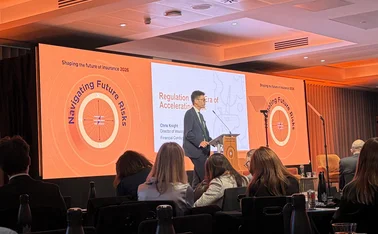
FCA’s Knight updates on cyber insurance report
Chris Knight, director of insurance at the FCA, has updated on the progress of its report into the take up of cyber insurance, and how the regulator has to keep pace with technological advancements.
Growing FCA attestation appetite a warning for brokers
The Financial Conduct Authority has increased the level of attestation requests dished out to insurance firms in recent years, and the serious regulatory tool is one brokers need to keep a keen eye on according to compliance specialists.

Why insurer oversight cannot become another regulatory box-ticking exercise
With regulatory workloads continuing to grow and the FCA maintaining its focus on customer outcomes, Insurance DataLab co-founder Matt Scott explains why brokers need a practical, evidence-led approach to insurer oversight.

FCA cancels insurance distribution business’ permissions
The Financial Conduct Authority cancelled Professional Liability Network’s permission to carry out regulated activities on 11 September 2026.