

Emerging risk - Looking beyond the horizon
Emerging risks are not being taken seriously enough according to some in the industry. Veronica Cowan gives an overview of the issues involved
The chief executive of Marsh UK, Martin South, has called on insurers to build bridges with brokers to capitalise on emerging risks, pointing to a persistent lack of understanding in areas such as business interruption, terrorism and environmental liability.
That should strike a chord with Steve Green, head of corporate lines at Zurich, who sees environmental risks and the costs associated with climate change as key areas in corporate risk exposure. Add to this list legislation likely to impact on managers, directors' liability in running a business, product safety and threats to reputation and suddenly the corporate landscape seems to be littered with landmines.
Problems can explode on a global scale, not least when product recalls risk denting confidence in a company. The atmosphere must have been far from sweet when confectionery giant Cadbury was fined £1m in the summer after pleading guilty to food and hygiene offences following a salmonella outbreak that made around 40 people ill, prompting a recall of more than one million chocolate bars in the UK. That was limited to the Midlands, but some risks are global.
Mattel, for instance, had to mount a worldwide recall of some of its Fisher Price toys in light of the discovery that there were traces of lead in the paint on them. "The latest EU figures on dangerous product notifications shows recalls are at an all-time high," reported Rod Freeman, product liability partner at Lovells, who noted that the number this year is up 43% on the average for 2006.
He observed: "The Fisher Price recall gave Meglena Kuneva, the new EU Commissioner for Consumer Affairs, a perfect opportunity to reiterate publicly her campaign to target the 'made in China' badge, recognising it as a source of significant quantities of dangerous consumer products identified in EU markets over recent years. This is a campaign mirrored by corresponding action from the Consumer Product Safety Commission in the United States."
In a speech to the European Parliament in September the Commissioner fired a warning shot over governmental and corporate bows when she said that the key to the success of any legal instrument lies in its effective enforcement, warning member states and companies to "raise their game on enforcement at national and local level". In Freeman's view the rise in product recalls is a result of stricter EU regulatory and enforcement measures rather than products becoming more dangerous. He commented: "Product safety regulations in the EU are, in many sectors, the strictest of any region in the world."
So how do companies protect their brands? Damian Glyn, a partner at loss adjuster Teceris, points out that damage to a firm's reputation has to be linked to physical damage to be covered under the terms of a business interruption policy. He explained that as an alternative there would have to be a specific financial loss extension to a liability policy, and added: "If you suffer damage to your brand and your sales go down, the business interruption policy covers loss of turnover following physical damage, so it would apply."
Glyn noted that accountants ask how you value intangibles on a balance sheet when assessing damage to your reputation, and that the UK does it on an historic costs basis generally, though it can also be done by calculating a future value. His advice was for companies to take the advice of a brand protection specialist and to give the press a good news agenda to counter negative publicity. He sees the trend towards working from home as an emerging risk for companies to address, as well as fewer able people being available to populate tomorrow's workforce. "Business is not investing in the education process," he remarked.
Europe
Several emerging corporate risks have their origin in EU legislation concerning the harmonisation of companies. A range of duties will be imposed under The Companies Act (2006), and Jim Gaskin, technical financial lines manager at Zurich, pointed out that it is important for risk managers and other insurance buyers to look at their portfolios and review the risks, rather than sticking with those insured in the last 10 years or just going for the cheapest option.
"It should not be just a cost issue, but should reflect a risk-assessment approach," he said, claiming that people investing in listed companies insist that director and officer insurance be in place. Reminding brokers that the indemnity limits are aggregated across all the company's directors and officers up to the maximum sum insured in a year, he noted that indemnity limits can be brought over £50m and should be reviewed, as well as ensuring the right risks are covered.
The differing duties under the Act provide scope for confusion, says John Schorah, head of corporate at Weightmans, who commented that the shareholder value emphasis in Section 172 - to promote the success of the company for the benefit of its members as a whole - has the potential to open the door to class actions. Schorah said: "This could confuse directors that might fail to perceive it does not relieve them of the duty to comply with other legislative and common law requirements." He gave the example of the obligation to be transparent about price-sensitive information for shares in publicly listed companies, which directors could feel conflicts with their duty to promote the success and value of the company. He added: "Directors will have to think more like lawyers."
Paul Thomas, a partner at Halliwells, said that they might need to go even further and consult lawyers to identify the risk areas. He observed: "It has become a standard item on board agendas to think of insured risks, but they should be trying to move towards looking proactively at uninsured risks, like brand protection." Almost all uninsured risks are legal risks, he remarked, citing the case of a company running into difficulty and finding that their D&O policy did not cover it. Gaskin agreed that if insurers are to encourage brokers to sell this type of cover to clients then they have to provide clear policy wordings so that it is clear what is and what is not covered.
Jonathan Smith, divisional director at boker Oval, said that an ongoing risk for all companies is that of their customers failing to pay for good or services rendered, but as the credit crunch starts to bite, companies selling to others on credit will have an increased risk exposure. He commented: "Banks are already taking a more cautious view; this will toughen and could affect credit insurers. The more marginal risks may not be taken on, and while there is no immediate risk, it is a progressive one."
He pointed out that underwriters are insuring the balance sheet of the company so changing lending rates or the imposition of lending terms on a trading company could have implications for insurance. He reports an upturn in sales of trade credit insurance in the last 18 months, which protects businesses against the risk of non-payment and customer insolvency, as boards perceived a deteriorating risk horizon.
Who's who
There are several credit insurers in this sector, with Euler Hermes - a member of Allianz and a subsidiary of AGF - the global leader in the world credit insurance market. Another global provider of credit management services is Coface, backed by its international banking group parent company, Natixis, with Atradius also making an impact. These three followed in turn by AIG, Ace, Lloyds syndicates, and now QBE.
The interest in investing in the sector has had an inevitable influence on price, and credit business rates over the last two years have reduced by 38%. "They have never been any lower than this and it's been a competitive, but also profitable, market," reported Duncan Wilson, branch director at Aon Trade Credit, who says the credit insurance market has not suffered an immediate impact from the crunch but he would expect there to be an effect.
Selling credit insurance to some of the larger corporations has become easier as credit insurance has become more flexible and commercial than it was five years ago. "A lot of media companies buy the cover, as well as those involved in engineering. If a company is exporting to overseas and emerging markets then there are credit and commercial risks. For instance, they may run out of foreign exchange or the government could cancel the licence," he said.
Corporate responsibility
In the first major claim in the UK since legislation on age discrimination was introduced in October 2006, a ruling was issued last month in the case of the former insolvency partner, Peter Bloxham, who lost his £4.5m claim against the Magic Circle's law firm, Freshfields Bruckhaus Deringer. The employment tribunal found unanimously that Freshfields had discriminated against him on the grounds of age when new pensions provisions were introduced, but this was justified as a balanced and proportionate means of achieving its aim of reforming its pension system.
According to Stephen Levinson, a partner at Manches who identifies age discrimination as an emerging risk, age discrimination differs from other forms of discrimination in that, with sex and racial discrimination, the same defence applies for indirect discrimination only. By contrast, in age discrimination cases the proportionate defence is applicable to both direct and indirect discrimination. That said, the Bloxham case should clarify some of the limitations.
Harassment is another emerging risk flagged up by Levinson, who noted that there is a conflict between the different laws. Protection from harassment on the grounds of race, sex and disability can be heard at employment tribunals, with the damages uncapped and a three-month time limit imposed, but harassment claims generally can be brought in a civil court and prosecuted in a criminal court. The civil action is time-barred only after six years. "It is not clear if insurance policies that cover employers' liability also extend to harassment, and the only way to describe this legal regime is a 'shambles'", he remarked, adding that we need a change in The Protection from Harassment Act (1997) to make sure all employment harassment claims are heard in the tribunal system.
The diversity of the risks emerging in the corporate environment should act as a trigger to brokers and insurers to exploit the potential they offer, but it is unclear how many of them are susceptible to the insurance products available currently. The backing of insurers is clearly needed to help brokers understand how their products are relevant to their clients and to address some of the issues raised by South. Building bridges requires skill, will and the right materials. It is up to insurers to provide the latter.
This article is from a Zurich supplement entitled ‘Corporate Risk’ which was distributed with the November edition of Professional Broking.
Only users who have a paid subscription or are part of a corporate subscription are able to print or copy content.
To access these options, along with all other subscription benefits, please contact info@insuranceage.co.uk or view our subscription options here: https://subscriptions.insuranceage.co.uk/subscribe
You are currently unable to print this content. Please contact info@insuranceage.co.uk to find out more.
You are currently unable to copy this content. Please contact info@insuranceage.co.uk to find out more.
Copyright Infopro Digital Limited. All rights reserved.
As outlined in our terms and conditions, https://www.infopro-digital.com/terms-and-conditions/subscriptions/ (point 2.4), printing is limited to a single copy.
If you would like to purchase additional rights please email info@insuranceage.co.uk
Copyright Infopro Digital Limited. All rights reserved.
You may share this content using our article tools. As outlined in our terms and conditions, https://www.infopro-digital.com/terms-and-conditions/subscriptions/ (clause 2.4), an Authorised User may only make one copy of the materials for their own personal use. You must also comply with the restrictions in clause 2.5.
If you would like to purchase additional rights please email info@insuranceage.co.uk
More on Regulation

Which? demands ban on brokers charging high motor APRs
Which? has named and shamed motor insurance brokers charging high interest rates on monthly policies and called for a ban on the practice.

No ‘particular targets’ for insurance regulation simplification, says FCA
Consumer Duty will be a building block for any future work on the simplification of insurance regulations that affect brokers, according to David Geale, executive director of consumers, payments and competition at the Financial Conduct Authority.

FCA kicked off financial year with improved authorisation service bar one outlier
The Financial Conduct Authority has upped its game on authorisation service levels in categories affecting brokers, with improvements in four areas, but one notable outlier where the performance dipped.
FCA alerts of Kent-based broker clone
Quotemetoday.co.uk has made clear it has no affiliation with Quote Me Go as the Financial Conduct Authority has reported fraudsters have been impersonating the Kent-headquartered broker.
FCA’s Knight updates on cyber insurance report
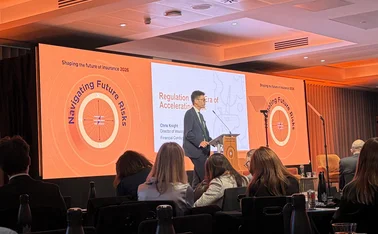
Chris Knight, director of insurance at the FCA, has updated on the progress of its report into the take up of cyber insurance, and how the regulator has to keep pace with technological advancements.
Growing FCA attestation appetite a warning for brokers
The Financial Conduct Authority has increased the level of attestation requests dished out to insurance firms in recent years, and the serious regulatory tool is one brokers need to keep a keen eye on according to compliance specialists.

Why insurer oversight cannot become another regulatory box-ticking exercise
With regulatory workloads continuing to grow and the FCA maintaining its focus on customer outcomes, Insurance DataLab co-founder Matt Scott explains why brokers need a practical, evidence-led approach to insurer oversight.

FCA cancels insurance distribution business’ permissions
The Financial Conduct Authority cancelled Professional Liability Network’s permission to carry out regulated activities on 11 September 2026.