

Where there's muck
Environmental risk is likely to become a significant liability for UK brokers and their commercial clients. Karl Russek outlines the opportunities for intermediaries in ensuring customers meet pending regulations on pollution
Unseen environmental risks and liabilities are not at the top of many businesses' agendas. But the exposure to major costs is likely to become a real issue for brokers and clients alike as European regulation in this area looks set to become law. And those most exposed may not be the obvious candidates - because the fact is all clients are likely to be at risk and the signs of pollution they might be responsible for may not be obvious.
Legislation from the European Union in the form of the Environmental Liability Directive is currently being negotiated onto the statute books of all EU countries. Brokers need to be assessing this legislation and enlightening their clients as to potential exposures - now.
Existing property and casualty insurance will not cover the extent and levels of liability likely to be imposed under the new legislation, but cover does exist that responds directly to the issues. However, brokers' recognition and understanding of the risks, and their perception that the cover required is complex and expensive, has contributed to the slow evolution of the class in the UK and Europe. Today, cover is neither complex nor costly - but perception is yet to catch up with reality.
The extent of liability may come as a surprise to brokers and clients. It is not just a matter for companies one might expect to have polluting issues, such as chemical and manufacturing sites. Any type or size of business could be liable purely on the basis of owning or leasing property built on contaminated land. Even if such contamination has nothing to do with the current activities taking place, environmental law can make it the responsibility of the owner or the leaser of the premises to address the issue and compensate for any damage that may result.
Pollution liability is a key aspect of environmental risk management, but many European organisations are currently under-insured. Exposures either due to ongoing operations or the impact of activities on property in the past can have a significant impact. There is virtually no way to be certain of what took place on premises years ago, so any organisation that owns or rents land is at risk.
There is growing pressure on organisations to operate in a social, ethical and environmentally responsible manner. Companies' corporate governance and compliance controls are becoming increasingly important considerations for existing shareholders, potential investors and lenders. Many customers attach value particularly to social and environmental responsibility when making purchase decisions.
The very extent of this liability means the matter is not just one to be addressed by big national or international brokers. All brokers have a responsibility to their clients to inform them of the potential impact of the directive.
The American lesson
Purely from a broker business point of view, the size of the market in the US is a salutary example. Legislation there has prompted a wide response from brokers, which have helped create a business worth over $1.5bn in gross written premium.
Environmental liability insurance was created in the mid-1980s in response to onerous US environmental legislation such as the Comprehensive Environmental Response, Compensation and Liability Act. The Act created a tax on the chemical and petroleum industries and provided broad federal authority to respond directly to releases or threatened releases of hazardous substances that might endanger public health or the environment. Importantly, this statute applies strict, as well as "joint and several" liability: thus a company can be held liable for the entire cost of a cleanup, no matter how small its contribution to the underlying pollution. As a result, environmental tort and regulatory issues command a lot of attention from corporate general counsel and chief financial officers in the US, and savvy brokers have tapped into this.
However, the advantage, if it can be seen that way, of the absence of a harsh tort and regulatory environment in the UK may actually disadvantage clients, because it has meant environmental liability insurance business has been slower to take off here. In addition, carriers' initial over-reliance on US methodologies and US pricing schemes led to a situation where brokers' early experiences with the product led them to the conclusion that it was too esoteric and pricey for a typical client.
Now, due to increased experience and competition, the product is much easier to obtain and much more affordable, particularly where it is sold alongside the traditional liability programme as part of a package.
Past and future liabilities
It is important to distinguish between broad cover for ongoing liabilities versus full historical cover. Many companies are opting to consider a broad "prospective cover" as part of their renewal, as this is extremely affordable - typically under 10% of the casualty premium - and can be underwritten largely on the basis of existing property and casualty underwriting information. Broader historical cover can then be considered for those sites where the need is sufficient to justify the additional cost.
This availability of affordable cover is particularly timely, given several key changes in the underlying regulatory environment are looming. These changes will also require business to meet increased levels of disclosure around their environmental exposures.
Clients with businesses operating across Europe will need to consider that, despite the drive for European harmonisation, EU regulations may still vary from country to country so organisations operating across borders must ensure they are aware of any differences in legal requirements and liabilities.
Polluter pays
The EU supports the principle that the polluter pays for the consequences of its pollution, and this principle is enshrined in the directive. Industrial polluters ("operators", as the directive calls them) carrying out "hazardous" activities will be held strictly liable (that is, there will be no need to demonstrate fault or negligence) for preventing or restoring any damage caused by those activities to land, water and protected habitats and species. In addition, operators carrying out other, less harmful, activities will be held liable when damage to protected habitats and species has been caused by their fault or negligence.
Where environmental damage occurs, the relevant national agency or government will require the operator to take steps to deal with the problem. If the operator cannot do this, for example because it is no longer trading, it will be open to national governments to establish common funds, financial guarantees or other methods of ensuring that pollution is cleared up if the original polluter cannot pay.
The EU has in fact given a great deal of consideration to the idea of a compulsory insurance for these liabilities, but the idea was opposed by some old-line property and casualty carriers in the UK and the rest of the EU, which felt the markets would not be ready to respond to such a requirement. This stance has further manifested itself as a continued effort by some in the industry to marginalise this type of cover as esoteric and expensive - perhaps more out of inertia than an effort to protect their clients' best interests.
However, few can argue that significant pollution coverage gaps exist in the typical liability cover - gaps set to widen in light of pending regulatory changes - and that these gaps can now be readily filled by affordable and easy-to-obtain products.
Policies can offer a range of coverages for gradual, sudden and accidental pollution resulting from the ownership and control of premises and/or the operation of facilities. Cover may incorporate: first-party remediation costs for pollution onsite and that migrating off-site, including claims from governmental agencies; third-party claims for bodily injury, property damage and remediation costs; pollution arising from the transportation of products or waste and their disposal at listed non-owned premises; coverage for first-party business interruption arising from pollution incidents; legal defence costs provided in relation to applicable policy coverages; claims in relation to mould; and damage to natural resources.
The question is, are middle-market brokers ready to make the investment to learn the product and help their clients fill these gaps?
The market place for environmental risk business used to be largely the province of the national brokers, which could afford specialist environmental units with dedicated staff to sell relevant products to companies with alarming environmental exposures. But that is an outdated picture: this market is now something smaller brokers need to be aware of because it is their customers, who tend to be small to medium-sized businesses, which are the ones most at risk from pending regulatory changes.
Fortunately the insurance cover available on the market offers coverage as wide as the potential problem and the wide reach of the EU directive, which seeks to address problems large and small, obvious or concealed.
Another reason for not having tackled the environmental liability issue with clients before has been that the Environmental Liability Directive has yet to become law in the UK. EU member states have until 30 April 2007 to incorporate its provisions into national law. But now is the time to get ahead of the game and inform clients of the risks that may lie ahead and how they can insure against them.
Some commentators say the vague and ambiguous terminology of the Environmental Liability Directive will undermine any attempts to develop innovative insurance products to ensure the financial security sought by the European Commission. But while, without doubt, we are waiting for a clear legal framework in the UK (and other countries), the issue of liability is not disputed - which is why brokers should be encouraging their clients to do something.
Only users who have a paid subscription or are part of a corporate subscription are able to print or copy content.
To access these options, along with all other subscription benefits, please contact info@insuranceage.co.uk or view our subscription options here: https://subscriptions.insuranceage.co.uk/subscribe
You are currently unable to print this content. Please contact info@insuranceage.co.uk to find out more.
You are currently unable to copy this content. Please contact info@insuranceage.co.uk to find out more.
Copyright Infopro Digital Limited. All rights reserved.
As outlined in our terms and conditions, https://www.infopro-digital.com/terms-and-conditions/subscriptions/ (point 2.4), printing is limited to a single copy.
If you would like to purchase additional rights please email info@insuranceage.co.uk
Copyright Infopro Digital Limited. All rights reserved.
You may share this content using our article tools. As outlined in our terms and conditions, https://www.infopro-digital.com/terms-and-conditions/subscriptions/ (clause 2.4), an Authorised User may only make one copy of the materials for their own personal use. You must also comply with the restrictions in clause 2.5.
If you would like to purchase additional rights please email info@insuranceage.co.uk
More on Regulation

Which? demands ban on brokers charging high motor APRs
Which? has named and shamed motor insurance brokers charging high interest rates on monthly policies and called for a ban on the practice.

No ‘particular targets’ for insurance regulation simplification, says FCA
Consumer Duty will be a building block for any future work on the simplification of insurance regulations that affect brokers, according to David Geale, executive director of consumers, payments and competition at the Financial Conduct Authority.

FCA kicked off financial year with improved authorisation service bar one outlier
The Financial Conduct Authority has upped its game on authorisation service levels in categories affecting brokers, with improvements in four areas, but one notable outlier where the performance dipped.
FCA alerts of Kent-based broker clone
Quotemetoday.co.uk has made clear it has no affiliation with Quote Me Go as the Financial Conduct Authority has reported fraudsters have been impersonating the Kent-headquartered broker.
FCA’s Knight updates on cyber insurance report
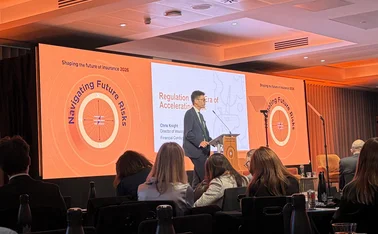
Chris Knight, director of insurance at the FCA, has updated on the progress of its report into the take up of cyber insurance, and how the regulator has to keep pace with technological advancements.
Growing FCA attestation appetite a warning for brokers
The Financial Conduct Authority has increased the level of attestation requests dished out to insurance firms in recent years, and the serious regulatory tool is one brokers need to keep a keen eye on according to compliance specialists.

Why insurer oversight cannot become another regulatory box-ticking exercise
With regulatory workloads continuing to grow and the FCA maintaining its focus on customer outcomes, Insurance DataLab co-founder Matt Scott explains why brokers need a practical, evidence-led approach to insurer oversight.

FCA cancels insurance distribution business’ permissions
The Financial Conduct Authority cancelled Professional Liability Network’s permission to carry out regulated activities on 11 September 2026.