

Property prospects
Andrew Tjaardstra examines the potential threat to property in the event of acts of terrorism and natural disasters and how insurers can ensure the best possible cover and advice for their clients
The first anniversary of the Boscastle floods evokes vivid memories of a village underwater and spectacular rescue missions to pull stranded villagers to safety onto helicopters. Following the coverage of the human cost of a disaster, insurance then hit the spotlight. Boscastle cost insurers between £10m and £15m in claims - many as a result of damaged property - a sum that has contributed towards the transformation of the village, though there are alleged outstanding claims from Jordan-based Arab-German Insurance.
In a study that highlights the uncertainty of risk in property damage, the Association of British Insurers has recently put forward recommendations for managing flood risks in the government's proposed new developments in areas such as the Thames Gateway.
Another contemporary threat to property is subsidence, especially given the combination of insufficient rainfall in the last few autumns and long, dry summers.
Although brokers have no control over the weather or accidental damage, they can ensure corporate clients have the best possible cover and advice about the care of their buildings, in the event of the worst happening.
While overinsured commercial property is common, sometimes - as a result of valuing a building on market value rather than the cost of rebuilding - underinsurance is more likely. Alistair Steward, risk solutions director at Cunningham Lindsey, which offers a valuation service for British Insurers Brokers' Association members, says: "Underinsurance applies to over 80% of the properties we value, with an average amount of underinsurance on commercial buildings around £150,000."
Reinstatement
Steward stresses there are a host of factors that need to be considered when valuing a reinstatement. He says: "An insurance valuation will not take into account the value of land, but should include not only the cost of rebuilding the property but demolition costs, removal of debris, professional fees and requirements imposed by local authorities. Also, the valuation should take into account legislation - such as physical changes required to the building - following a loss, under the terms of the Disability Discrimination Act 1995, such as installing lifts."
He continues: "There are also hidden costs in removing debris such as asbestos and these should be taken into account when settling a building sum insured."
In addition, advisers should be aware of the full implications of professional indemnity claims. Steward explains: "If a broker recommends to a client that they should insure their building for £1m - when, in fact, the true cost is £2m - not only is the insurers' liability restricted to £1m in the event of a total loss, the insurer is only liable to pay for 50% of any partial loss incurred. Under these circumstances it is possible the client will look to the broker to reimburse the difference if it is proven that negligent advice was provided."
Consequently, brokers are becoming less inclined to assist their clients in setting a reinstatement value. Steward says: "Brokers realise that not only is it difficult to apply an accurate rate per square metre for the general rebuilding cost, but they are unlikely to take into consideration factors, that adjusters know will affect the reinstatement value."
One example is a listed building that is unlikely to be rebuilt using modern materials. He cites the following example: "We have had to arrange for a disused stone quarry to be reopened in order to complete the reinstatement of a property with like-for-like materials."
Andy Poole, business development director, and Steve Woolley, business development executive at broker Stuart Alexander, which administers a scheme for property managing agents, agreed that policies should include an inflation provision. This is because the costs of building materials and builders may increase from the time the policy is signed until the rebuilding work takes place. The time it takes to erect buildings should also be considered. They recommend reinstatement valuations should be undertaken once every three years.
Woolley says: "Portfolio owners are becoming a lot more aware and savvy about insurance. Previously it was a second thought, but now they realise the importance of insurance. That makes our job - in essence - easier, but it is actually harder, because they only tend to know very little about a big topic."
There can be real benefits for using a risk solution expert, for example, insurers such as Axa and Norwich Union will give an average waiver guarantee to firms if an approved specialist is used.
Stuart Alexander uses two companies to assess reinstatement costs and, subsequently, its insurers will remove the average from policies.
Growth
Commercial property insurance had underwriting profits of £437m in 2003, according to market researcher Datamonitor. Neil Mercier, property insurance manager at Axa, says many firms saw record profits in 2003 and 2004. The same Datamonitor survey offered good news to intermediaries as it found that, in 2004, only 4% of the market underwrites directly, even though 21.4% of SMEs go direct.
Poole says: "Insurers have not been able to keep up with the service levels required in this area of direct underwriting."
However, rates are softening and Datamonitor's research concludes gross written premium is expected to hit a low point of £4.8bn by the end of 2006, compared with £5.3bn at the end of 2004, though it says harder market conditions will then return.
For Stuart Alexander, commercial property makes up one-quarter of its business. This is set to grow; for example, its property owners' unit has grown by 50%.
Poole explains where some of the growth has occurred: "There have been a number of growth areas in commercial property, including shopping centres, while the rise of the internet has seen an increase in the number of warehouses for the storage of goods."
Mercier says the commercial construction market is mature but expects projects such as the Olympic Games to up demand. However, he says demand is not meeting supply for residential housing due to problems in establishing where to build new homes. The government's solution has been to build on areas that are liable to flooding, bringing its own risks.
There is also a trend of buying commercial property abroad, Mercier says. Blue-chip companies are looking to buy offices, industrial and trading estates in countries such as Spain, France, Poland and the Czech Republic, because it is increasingly difficult to make money on rental in the UK.
However, regulatory barriers are stopping smaller firms following this trend. Woolley says: "I have prospects with money in the bank, and they are trying to find property to buy, but are struggling to find the right properties in the UK. However, it is a big step to go abroad - especially for small companies - because the regulation is so different. One of the ways for a UK broker to tackle this is to take on a partnership with a European broker."
Also, stock-market stagnation in recent years means more money is being staked in property. Poole says: "Since 11 September 2001, as the stock market has suffered, large pension companies have placed more money from pension funds into buying property, and that has meant other companies start to look abroad because they cannot find what they are looking for in the UK."
Terrorism
The London bombings in July have had little impact on the reserves of UK government terrorist cover offered by the government mutual reinsurer Pool Re (Lloyd's also offer cover). However, Mercier has the following warning for brokers: "Although terrorism cover is optional, any broker who has not had a serious conversation about terrorism cover is running the risk of a serious issue."
Poole says you cannot select which buildings you cover if using Pool Re as your reinsurer. He says: "If a policyholder wants to insure one commercial property they must insure the entire commercial portfolio and the same rule applies to residential portfolios." Making his point, he adds: "You need to cover all buildings even if you have one building in London and nine in Aberystwyth."
There are other quirks when it comes to terrorism as private dwellers are automatically covered, but those living in flats have to purchase it separately.
Because acts of terrorism are interpreted by the government, it may be worth commercial property owners extending their cover to the terrorism buy-back extension on the material damage section of the policy. Poole explains: "Cover here will apply for all insured perils including explosion, chemical, biological and nuclear contamination, but only where there has been physical damage to the insured's property." Business interruption can provide comprehensive cover, including any losses to 'hoaxes' under the extensions 'actions of competent authorities' or 'non-damage prevention of access' extension. Security and disaster recovery plans are also essential when considering such risks.
Demand has been growing for terrorism cover, and White Rock, a subsidiary of Aon, has formed White Rock Insurance (Europe) to offer corporate clients cover away from the membership of national pools.
Meanwhile, efforts in the US to deal with the threat of terrorism provide an interresting contrast. Congress is debating whether to extend the Terrorism Risk Insurance Act. The law was passed in November 2002 in order to back up insurance companies following the events of 11 September 2001, but is due to expire in November. The act established federal reinsurance for 90% of cover for commercial property and casualty exposures against an act of terrorism, following payment of a deductible. The debate is over how much taxpayers' money should be used as cover for terrorist activities and whether the act is hindering the recovery of the industry.
The Bush Administration wants to restrict government funds available for liabilities by increasing deductibles and removing cover for commercial vehicles and general liability. It argues that the act in its present form is hindering the insurance industry. The American Insurance Association wants the act to become permanent, with modifications, and believes a public-private partnership is the only way to protect US businesses fully.
Competition
Commercial property is set to be an increasingly competitive market among brokers and insurers alike over the next few years, and it is paramount that best advice is given. Fortunately, natural disasters and terrorism are rare occurrences.
Health and safety is also improving, for example, builders are now beginning to use materials such as rock wool to replace the more combustible polystyrene between the two sheets of metal that make up the outer shell of many warehouses.
But accidents happen. Poole cites a multimillion-pound claim after a major food supplier in London was forced to dump stock from its warehouse after being contaminated from smoke at a nearby building. The case, which is still being deliberated, highlights the range of perils facing property owners that brokers must help them legislate for through secure advice and comprehensive cover.
Only users who have a paid subscription or are part of a corporate subscription are able to print or copy content.
To access these options, along with all other subscription benefits, please contact info@insuranceage.co.uk or view our subscription options here: https://subscriptions.insuranceage.co.uk/subscribe
You are currently unable to print this content. Please contact info@insuranceage.co.uk to find out more.
You are currently unable to copy this content. Please contact info@insuranceage.co.uk to find out more.
Copyright Infopro Digital Limited. All rights reserved.
As outlined in our terms and conditions, https://www.infopro-digital.com/terms-and-conditions/subscriptions/ (point 2.4), printing is limited to a single copy.
If you would like to purchase additional rights please email info@insuranceage.co.uk
Copyright Infopro Digital Limited. All rights reserved.
You may share this content using our article tools. As outlined in our terms and conditions, https://www.infopro-digital.com/terms-and-conditions/subscriptions/ (clause 2.4), an Authorised User may only make one copy of the materials for their own personal use. You must also comply with the restrictions in clause 2.5.
If you would like to purchase additional rights please email info@insuranceage.co.uk
More on Insurer

People Moves: 19 – 23 October 2026
Stay in the loop with the latest insurance personnel moves.

Allianz teams up with Superscript on SME commercial insurance
Allianz UK is set to provide capacity for digital insurance broker Superscript’s landlord and tradespeople propositions.

UK commercial softening approaching three year mark – Marsh
UK commercial market rates softened by 8% in the third quarter, maintaining the rate seen throughout the year and the eleventh quarterly drop in a row, according to Marsh.
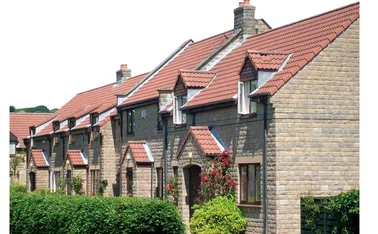
Home insurance premiums fall again as Defaqto warns of claims pressures
Home insurance prices fell by 2.4% in the third quarter, with drops every month, according to the latest research by Defaqto.

Subscribe adds £5m Fortegra capacity
Subscribe MGA has secured a long-term capacity agreement with Fortegra Insurance UK.
Arch recruits Donald from Axa for Glasgow branch manager role
Arch Insurance’s UK regional division has appointed Karen Donald as branch manager of its Glasgow operations, effective immediately.

Allianz refreshes mid-market manufacturing offering
Allianz UK has continued to refresh its Commercial Select sector propositions by enhancing cover for manufacturing businesses with turnover between £10m and £1.5 bn.
Blog: Consistency could be the next big differentiator for insurers
John Dunn, managing director of Brokerbility, argues insurers willing to focus on relationships that deliver reliable and consistent positive experiences have a significant opportunity to become a partner that brokers actively want to do more business with.