

Claims limitation - Does limitation limit exposure?
Brokers must ensure that policyholders are aware of the risks of inflation and increasing costs in the event of a claim made against them, write Alison Wood and David Toulmin Van Sittert
The concept of limitation, or time-barring a claim, is well-known. Slow but gradual changes are afoot, however, to the potential detriment of policyholders. As the broker advising the policyholder, these changes become relevant as they have a direct impact on the amount of cover that may be best suited to a policyholder.
The law relating to limitation is complex and it evolves constantly. Where there is a claim in tort for damages for personal injury caused by negligence, nuisance or breach of duty, the limitation period is three years. This three-year period commences either from the accrual of the cause of action or the claimant's date of knowledge, whichever is the later.
Where a claimant is a minor or a protected party, limitation does not run until the attainment of the age of 18 years or until the protected party status is removed; as such, claims can be started decades after the accident.
Furthermore, the court has discretion to extend this three-year period if it seems equitable to do so and it may take any relevant factor into account in determining this. Be under no illusion: a court is little swayed by the financial impact of any decision that it may reach in exercising this discretion, even more so in the event of a potential defendant enjoying some form of insurance cover. Recent decisions show that this discretion is being applied in favour of the claimant.
When handling catastrophic injury cases for employers' and public liability insurers in 2008 that arose out of accidents in the 1990s or earlier, the effect of inflation and the tendency of increasing damages awards over the years means that the amount of policy cover can be barely adequate or even inadequate: there is a potentially life-changing financial consequence for the policyholder. The claimant would look to the policyholder to satisfy any part of a court order in excess of the policy limit. Notifying the policyholder in this event is an unpleasant task.
Would a public liability limit of £1m, £2m or £5m be sufficient to cover an adverse catastrophic incident that occurs now but is valued a number of years hence? While an increased employers' or public liability limit will increase the premium payable by a policyholder - a prospect that will not be palatable in the present economic climate - it is essential that policyholders are aware of the risks that they face should a catastrophic incident occur. The cover that they are buying now is to give them protection against claims that may be quantified in the next decade.
Alison Wood, partner, and David Toulmin Van Sittert, solicitor, injury risk group, Beachcroft.
Only users who have a paid subscription or are part of a corporate subscription are able to print or copy content.
To access these options, along with all other subscription benefits, please contact info@insuranceage.co.uk or view our subscription options here: https://subscriptions.insuranceage.co.uk/subscribe
You are currently unable to print this content. Please contact info@insuranceage.co.uk to find out more.
You are currently unable to copy this content. Please contact info@insuranceage.co.uk to find out more.
Copyright Infopro Digital Limited. All rights reserved.
As outlined in our terms and conditions, https://www.infopro-digital.com/terms-and-conditions/subscriptions/ (point 2.4), printing is limited to a single copy.
If you would like to purchase additional rights please email info@insuranceage.co.uk
Copyright Infopro Digital Limited. All rights reserved.
You may share this content using our article tools. As outlined in our terms and conditions, https://www.infopro-digital.com/terms-and-conditions/subscriptions/ (clause 2.4), an Authorised User may only make one copy of the materials for their own personal use. You must also comply with the restrictions in clause 2.5.
If you would like to purchase additional rights please email info@insuranceage.co.uk
More on Regulation

Which? demands ban on brokers charging high motor APRs
Which? has named and shamed motor insurance brokers charging high interest rates on monthly policies and called for a ban on the practice.

No ‘particular targets’ for insurance regulation simplification, says FCA
Consumer Duty will be a building block for any future work on the simplification of insurance regulations that affect brokers, according to David Geale, executive director of consumers, payments and competition at the Financial Conduct Authority.

FCA kicked off financial year with improved authorisation service bar one outlier
The Financial Conduct Authority has upped its game on authorisation service levels in categories affecting brokers, with improvements in four areas, but one notable outlier where the performance dipped.

FCA alerts of Kent-based broker clone
Quotemetoday.co.uk has made clear it has no affiliation with Quote Me Go as the Financial Conduct Authority has reported fraudsters have been impersonating the Kent-headquartered broker.
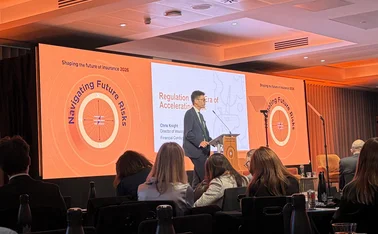
FCA’s Knight updates on cyber insurance report
Chris Knight, director of insurance at the FCA, has updated on the progress of its report into the take up of cyber insurance, and how the regulator has to keep pace with technological advancements.
Growing FCA attestation appetite a warning for brokers
The Financial Conduct Authority has increased the level of attestation requests dished out to insurance firms in recent years, and the serious regulatory tool is one brokers need to keep a keen eye on according to compliance specialists.

Why insurer oversight cannot become another regulatory box-ticking exercise
With regulatory workloads continuing to grow and the FCA maintaining its focus on customer outcomes, Insurance DataLab co-founder Matt Scott explains why brokers need a practical, evidence-led approach to insurer oversight.

FCA cancels insurance distribution business’ permissions
The Financial Conduct Authority cancelled Professional Liability Network’s permission to carry out regulated activities on 11 September 2026.