

Eco-liability warriors
Wayne Harrington highlights the key insurance and risk issues created by the implementation of the European Union's Environmental Liability Directive at the end of April
UK businesses are increasingly conscious of their potential impact on the environment. This recognition is driven in no small part by public awareness of core issues like climate change and the destruction of biodiversity, and the perception that industry is the main culprit.
However, at an individual company level there can be far less understanding of the liabilities faced for such environmental impacts, in terms of direct financial cost and loss of reputation.
Environmental legislation is becoming broader and more stringent and it is vital that organisations fully appreciate this. Liabilities can arise from historical pollution events, which have resulted in contamination of land or water resources in particular. Responsibility for undertaking any required clean up of this pollution can rest with the company that directly caused the incident or allowed the contamination to remain without taking the required action. However, it can also default to the current owner of the property because the original polluters cannot be traced or have failed financially.
In addition, pollution exposures are presented by the ongoing operations of the company and their possible harmful effect on human health or the environment. The European Union Environmental Liability Directive, active with effect from 30 April 2007, focuses more intently on company operations and looks to impose harsher penalties for any pollution impacts they create.
The ELD seeks to harmonise the regime across the EU, reinforcing the principle that the polluter should pay for environmental damage they cause. It introduces a number of key developments, including a strict liability regime for a large number of 'regulated' industries, for example, those that operate under permit, license or consent conditions agreed with the regulatory authorities.
The legislation places substantial emphasis on damage to biodiversity, such as natural habitats and protected species, introducing strict standards for its regeneration and remediation should impacts occur. Indeed, if pollution occurs that poses a threat to human health, the risk would have to be removed, a stance taken under existing legislation. However, if the impact is to biodiversity, the damaged resources will have to be returned to the condition they were in prior to the event - the baseline condition.
This is where the financial costs could be more significant than under current legislation. Where the polluter is unable to repair the damage done and achieve the baseline condition at the primary site, they may be forced to pay complementary remediation costs, for example, undertaking clean-up work at an alternative natural resource area in the UK. In addition, there may be compensatory remediation costs to pay whilst the primary or compensatory clean-up activities are taking place.
It is important to point out that the ELD does not introduce the environmental liabilities that companies may face. Pollution to air, land and water is already subject to extensive and long-standing legislation, which can result in significant clean-up costs, fines and penalties imposed by regulators. However, it will certainly reinforce the environmental regime with a firmer and more consistent hand than previously.
Enforcing environmental laws
The regulatory actions taken by the Environment Agency or local authorities in enforcing environmental laws like the ELD are only part of the picture. Companies may also be faced with common law claims for damages from members of the public, who have been affected by the pollution event.
Given the possibility of legal action from third parties due to injury or property damage, a significant number of companies would rely on their public liability insurance policies to respond in the event of an environmental incident. However, there is huge uncertainty as to the extent of pollution coverage under such wordings, which are typically limited to 'sudden and accidental' pollution events and would not include the costs of cleaning up the company's own site. The claims scenario highlights these issues (see box).
If mainstream insurance products cannot be relied upon to respond to meet such claims, the alternative is for companies to look to the specialist environmental insurance market for solutions, which are specifically designed to respond in such circumstances. Unfortunately, a lack of awareness regarding potential pollution liabilities is matched by a poor understanding of specific environmental insurances available.
Historically, the environmental insurance market has focused on large transactional deals, driven by merger and acquisition business or property asset purchase, disposal or development. These transactions have typically resulted in policies with lengthy policy periods, substantial limits, significant deductible/excess levels and complex wordings. Crucially, they have also been relatively expensive and difficult to obtain in terms of process and information requirements.
This narrow focus has created a slow-growing environmental market in the UK and Ireland, where the perception among companies and intermediaries alike is understandably negative.
Although environmental insurers are at fault for concentrating on large premium business and the over-engineering of risks, the broker community has also been slow at recognising changes that have clearly occurred in the last 18 months.
The market is now offering a wide range of products, which are accessible for companies of all sizes and which provide broad coverage at competitive premium levels. Both historical and operational risks can be insured for periods from 12 months to 10 years. Coverage can be provided for third-party legal liability, first-party clean-up costs and business interruption, with other bespoke extensions and combinations available.
Enhancing policies
A concerted effort has been made to target and develop small to medium-sized enterprise business, particularly through enhancing liability and package policies with environmental coverage. Any barriers to accessing the product have been broken down with streamlined information requirements and the full utilisation of technology through online solutions.
Insurers are keeping a close eye on developments in environmental legislation, with the intention of ensuring coverage is provided for the key risks this presents. Indeed, policies have already been amended in response to the ELD, including the increased focus on biodiversity and additional remediation costs. This is a work in progress, as the relevant governmental bodies have been slow to implement, but this does clearly demonstrate a significantly higher level of proactiveness and product development, contrary to out-of-date perceptions.
A key point to make here is that specialist environmental insurances are designed to respond to events such as that outlined in the claims scenario. It is a simple question for companies to be asked, would they rather rely on 'traditional' insurances with the uncertainty that most or all of the costs may be excluded or buy an environmental policy specifically developed to protect against such exposures?
Essentially, the environmental insurance market has woken up to the opportunities available in broadening the product range and customer base. This type of insurance is recognised as a growth area, particularly given the continued development of relevant legislation. This expansion is in terms of the coverage as a standalone offering and as a value-added bolt on to other more familiar policy types.
Brokers can no longer slot environmental risks into the 'uninsured' category when discussing issues with their clients. The age-old excuses for not presenting environmental insurance as a possible solution to those issues, namely "it's expensive, difficult to obtain and hard to understand" are no longer valid. Products are available right now and they are affordable, accessible and simple. If one broker fails to recognise this, you can guarantee there will be a number of competitors seeking to exploit this ignorance in picking up the business.
Wayne Harrington, Vice president - environmental risk, Ace European Group
Case study
Claims Scenario: A heating oil tank attached to a garage and car showroom developed a fracture in an underground pipe. Over a seven to eight month period, fuel oil seeped from the tanks into the surrounding soil and groundwater, contaminating both the car dealer's land and neighbouring property. The extent of the contamination was not realised until oil was noted in a nearby watercourse.
The Environment Agency and Local Authority Contaminated Land Officer were immediately involved, with the former undertaking remedial works to remove contamination from the watercourse. The car dealer was required to reimburse the EA for the costs incurred.
In agreement with these regulatory bodies, the car dealer also completed the clean-up of the neighbouring property and their own site, removing all contaminated soils. They also installed a groundwater treatment and monitoring system, which was operated over the subsequent six months.
Insurance Product: The car dealer had purchased a site pollution policy from a specialist environmental insurer for the past two years. This policy responded to the gradual pollution incident, meeting the first party costs of remediating their own site, the neighbouring property and the nearby watercourse. The insurance also included business interruption cover, which picked up the loss of profit arising from temporary closure of the dealership whilst remedial works took place.
The car dealer's property damage and liability policies did not respond to this event.
Only users who have a paid subscription or are part of a corporate subscription are able to print or copy content.
To access these options, along with all other subscription benefits, please contact info@insuranceage.co.uk or view our subscription options here: https://subscriptions.insuranceage.co.uk/subscribe
You are currently unable to print this content. Please contact info@insuranceage.co.uk to find out more.
You are currently unable to copy this content. Please contact info@insuranceage.co.uk to find out more.
Copyright Infopro Digital Limited. All rights reserved.
As outlined in our terms and conditions, https://www.infopro-digital.com/terms-and-conditions/subscriptions/ (point 2.4), printing is limited to a single copy.
If you would like to purchase additional rights please email info@insuranceage.co.uk
Copyright Infopro Digital Limited. All rights reserved.
You may share this content using our article tools. As outlined in our terms and conditions, https://www.infopro-digital.com/terms-and-conditions/subscriptions/ (clause 2.4), an Authorised User may only make one copy of the materials for their own personal use. You must also comply with the restrictions in clause 2.5.
If you would like to purchase additional rights please email info@insuranceage.co.uk
More on Regulation

Which? demands ban on brokers charging high motor APRs
Which? has named and shamed motor insurance brokers charging high interest rates on monthly policies and called for a ban on the practice.

No ‘particular targets’ for insurance regulation simplification, says FCA
Consumer Duty will be a building block for any future work on the simplification of insurance regulations that affect brokers, according to David Geale, executive director of consumers, payments and competition at the Financial Conduct Authority.

FCA kicked off financial year with improved authorisation service bar one outlier
The Financial Conduct Authority has upped its game on authorisation service levels in categories affecting brokers, with improvements in four areas, but one notable outlier where the performance dipped.

FCA alerts of Kent-based broker clone
Quotemetoday.co.uk has made clear it has no affiliation with Quote Me Go as the Financial Conduct Authority has reported fraudsters have been impersonating the Kent-headquartered broker.
FCA’s Knight updates on cyber insurance report
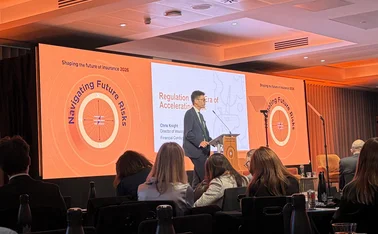
Chris Knight, director of insurance at the FCA, has updated on the progress of its report into the take up of cyber insurance, and how the regulator has to keep pace with technological advancements.
Growing FCA attestation appetite a warning for brokers
The Financial Conduct Authority has increased the level of attestation requests dished out to insurance firms in recent years, and the serious regulatory tool is one brokers need to keep a keen eye on according to compliance specialists.

Why insurer oversight cannot become another regulatory box-ticking exercise
With regulatory workloads continuing to grow and the FCA maintaining its focus on customer outcomes, Insurance DataLab co-founder Matt Scott explains why brokers need a practical, evidence-led approach to insurer oversight.

FCA cancels insurance distribution business’ permissions
The Financial Conduct Authority cancelled Professional Liability Network’s permission to carry out regulated activities on 11 September 2026.