

Know the warning signs
Frazer Fletcher gives an overview of what to consider when tackling subsidence claims
To most people, the purchase of their home is the largest single investment they make in a lifetime, making subsidence an emotive and worrying subject.
While the last few years have not seen any major surges in subsidence claims numbers, with the last major surge event in Autumn 2003 (subsidence is more prominent in the second half of the year - see graph), brokers need to remain vigilant as to the potential issues surrounding subsidence claims and the possibility of a surge in future claims.
During this quiet period is a good time for brokers to communicate with their customers. Intermediaries can provide prevention advice, differentiate their offerings and enhance their customer relationships. Brokers' depth of knowledge of subsidence claims is increasing and they can help manage the expectations of customers. Subsidence claims can take time to resolve and it is important the customer understands that it is in their long-term interest that a thorough process is adhered to.
Many brokers issue regular newsletters to their customers and the advice provided within them should have a growing emphasis on preventing subsidence damage. The newsletter could suggest taking early measures with regard to vegetation management and drainage repairs, or it might advise on the suitability of particular tree types and the safe planting distances of trees growing on shrinkable clay soils. Where local authority trees are involved it also makes good sense to inform customers regarding the framework within which local authorities work, as well as how they are required to balance the amenity value of trees against the damage they cause or potentially can cause.
Brokers may want to explain subsidence, covering how it affects domestic dwellings and how to find it. To do so through the medium of a customer-issue document, a firm might seek the assistance of experienced loss adjusters, engineers or surveyors dealing with subsidence claims. Loss adjusters can also provide training to broking staff.
Broker managers should ensure their staff members attend courses that cover the causes and remedies of subsidence, as well as issues such as tree root nuisance, basic drainage construction and surveys. Employees should gain a working understanding of health and safety regarding building repair contracts. Those trained can then provide advice to customers, enhancing the standing and credibility of a firm in the process.
Customers should be advised to contact their building's insurer as soon as they think they have a problem. Policies generally require the insurer to be informed of any potential claim as soon as possible; in any event, the sooner the problem is investigated then the less time it has to develop and the less inconvenience it causes.
The majority of customers are unaware of the Association of British Insurers domestic subsidence claim handling agreement. Although it is the loss adjuster's responsibility to explain this in detail, brokers should make their customers aware that the agreement sets out what insurer will be responsible for handling any claims.
The most critical section of the agreement regards where claims have been notified to the customer's current insurer between eight weeks and one year from the inception date of a policy. In this case the claim will be handled by the current insurer, the cost of settlement being shared equally by the previous provider. Brokers can therefore assist in such cases by advising provision to the loss adjuster of previous insurer's details.
The usual claims handling investigation process will be explained fully by the loss adjuster, though brokers can help smooth the claims process and speed it up by advising clients to have any documents, in particular any prior survey reports, for the loss adjuster to inspect at the initial visit to the home in question. The insured should also be advised to assist by cooperating with any requested management of trees and bushes that are found to be implicated in the problem at hand.
One area of weakness in subsidence claims is the explanation of alternative repair methods, many of which are not well known to the general public, who can be suspicious of their effectiveness. There are now many viable alternatives to traditional mass-concrete underpinning or piling methods, the majority of which carry guarantees that are often backed by insurance. These extra options may be advantageous in reducing disruption or enabling the customer to remain at home.
While individual alternative methods are not a panacea for all subsidence problems, careful investigations will reveal whether or not there are any suitable alternatives in the rare event that substructure repairs are being considered. Fewer than 5% of valid claims actually require some form of underground or alternative method of stabilisation - these are in turn are fewer than 40% of claims submitted.
Health and safety is of the highest concern and recent changes to the Construction Design Management Regulations in 2007 place an even greater emphasis of responsibility on insurers and their suppliers. The welfare of customers must be protected during insurance-funded building repairs.
Sometimes, where repairs are less severe, the home can remain occupied while repairs are completed. Careful planning will avoid accidents happening in these situations. The customer should be advised as follows:
- Do not leave children under the age of 16 unsupervised during work inside the home
- Exclude pets from the areas of work
- Remove items such as ornaments, light fittings and valuables from the areas where work is to be undertaken
Expectations
In turn, the customer should expect the repair contractor to provide reasonable notice of when the works will be carried out, as well as present personal identification and explain the nature and extent of work they will be undertaking.
The contractor should also carry out the work in an orderly manner and at reasonable times, treating the customer with respect and courtesy. Rubbish and tools at the end of each day should be disposed of and work areas left clean and tidy, and the on-site personnel carrying out the works should ensure that services are in a safe condition.
Where works are extensive, customers may be requested to vacate their homes in the short term so that the repairs can be completed without placing the occupants or the contractor's employees in danger. In these circumstances, the main contractor is required by health and safety law to declare the home a temporary building site and assume responsibility for managing health and safety on the site during the course of the building repairs.
Under such circumstances, brokers may then have to tell their customers that they will have to make an appointment to visit their own home. This ensures that any visitors to the building site are provided with the necessary protective equipment and clothing and that their access to any dangerous parts of the building is controlled.
A primary concern for customers is that of a home potentially being blighted on the market as a result of subsidence. In reality, many purchasers are unlikely to be put off by buying a home that may have suffered some subsidence damage in the past, as long as the mitigation works have been undertaken effectively and the repairs were appropriate and constructed correctly.
Nevertheless, a negative public perception remains, despite measures attempting to alleviate concerns - such as the provision of 10-year insurance-backed guarantees for underpinning and piling works, which results in the issuing of structural adequacy certificates after completion.
Very few problems re-occur in premises that have been underpinned or repaired structurally. It may be argued that the risk of further subsidence is potentially lower than in properties that have not had it diagnosed previously. This is testament to the quality of the advice given regarding mitigation work and the design and execution of repairs when necessary.
- Frazer Fletcher, director of construction and engineering, AMG.
Only users who have a paid subscription or are part of a corporate subscription are able to print or copy content.
To access these options, along with all other subscription benefits, please contact info@insuranceage.co.uk or view our subscription options here: https://subscriptions.insuranceage.co.uk/subscribe
You are currently unable to print this content. Please contact info@insuranceage.co.uk to find out more.
You are currently unable to copy this content. Please contact info@insuranceage.co.uk to find out more.
Copyright Infopro Digital Limited. All rights reserved.
As outlined in our terms and conditions, https://www.infopro-digital.com/terms-and-conditions/subscriptions/ (point 2.4), printing is limited to a single copy.
If you would like to purchase additional rights please email info@insuranceage.co.uk
Copyright Infopro Digital Limited. All rights reserved.
You may share this content using our article tools. As outlined in our terms and conditions, https://www.infopro-digital.com/terms-and-conditions/subscriptions/ (clause 2.4), an Authorised User may only make one copy of the materials for their own personal use. You must also comply with the restrictions in clause 2.5.
If you would like to purchase additional rights please email info@insuranceage.co.uk
More on Regulation

Which? demands ban on brokers charging high motor APRs
Which? has named and shamed motor insurance brokers charging high interest rates on monthly policies and called for a ban on the practice.

No ‘particular targets’ for insurance regulation simplification, says FCA
Consumer Duty will be a building block for any future work on the simplification of insurance regulations that affect brokers, according to David Geale, executive director of consumers, payments and competition at the Financial Conduct Authority.

FCA kicked off financial year with improved authorisation service bar one outlier
The Financial Conduct Authority has upped its game on authorisation service levels in categories affecting brokers, with improvements in four areas, but one notable outlier where the performance dipped.

FCA alerts of Kent-based broker clone
Quotemetoday.co.uk has made clear it has no affiliation with Quote Me Go as the Financial Conduct Authority has reported fraudsters have been impersonating the Kent-headquartered broker.
FCA’s Knight updates on cyber insurance report
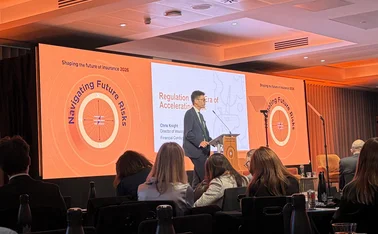
Chris Knight, director of insurance at the FCA, has updated on the progress of its report into the take up of cyber insurance, and how the regulator has to keep pace with technological advancements.
Growing FCA attestation appetite a warning for brokers
The Financial Conduct Authority has increased the level of attestation requests dished out to insurance firms in recent years, and the serious regulatory tool is one brokers need to keep a keen eye on according to compliance specialists.

Why insurer oversight cannot become another regulatory box-ticking exercise
With regulatory workloads continuing to grow and the FCA maintaining its focus on customer outcomes, Insurance DataLab co-founder Matt Scott explains why brokers need a practical, evidence-led approach to insurer oversight.

FCA cancels insurance distribution business’ permissions
The Financial Conduct Authority cancelled Professional Liability Network’s permission to carry out regulated activities on 11 September 2026.