

Concerns over incoming Companies Act
While the Companies Act appears to do little to alter directors duties under the law, its application could pave the way for new litigation
Described as the most radical reform of UK company law in over 20 years, the Companies Act 2006 received Royal Assent on 8 November 2006, although its provisions will not all be in force until October 2008.
Key new provisions include a statutory statement of directors' general duties, and a right for shareholders to bring claims against directors for negligence and other defaults. The statement aims to clarify what is expected of directors and requires directors to: act within the company's power; use their own powers for their proper purpose; promote the company's success; exercise independent judgement; exercise reasonable care, skill and diligence; avoid conflicts of interest; not accept benefits from third parties; and declare interests in proposed transactions or arrangements.
While these duties should be familiar to directors, as worded they go beyond current common law duties. Their precise application remains uncertain and interpretation of these provisions could well form the basis of extensive litigation.
Another part of the Act is dedicated to auditors' liability. Currently auditors cannot limit their liability for negligence. However, the new Act permits agreed liability limitations for audit work (including liability caps and proportionate liability), subject to shareholder approval.
The Act also introduces a new criminal offence, punishable by an unlimited fine, of knowingly or "recklessly" including misleading, false or deceptive information in an auditor's report. Initial commentary suggests a high threshold for "recklessness".
The Act is not revolutionary, it modernises existing law and simplifies procedures. Nevertheless, new ground is broken by the statement of standards and statutory duties for directors and auditors. Professional advisers need to come to terms with the new duties, both for themselves and to understand how they affect clients.
Insurers and brokers alike can expect to see a shift in the way claims are framed. Risk management will remain key as both companies and auditors plan for the Act's implementation. Further, brokers will need to take a more active role in maintaining claims records and making enquiries, not only into claims made against an auditor, but also into any 'reckless' allegations. Criminal fines are excluded from an auditor's professional indemnity cover. However, on renewal, brokers should advise on the cover provided for the costs of defending criminal charges.
Directors without D&O insurance cover may wish to look into this now, especially until the extent of their duties becomes clear.
- Mike Willis and Lindsay Bowskill, Partner and Solicitor, Beachcroft LLP.
Only users who have a paid subscription or are part of a corporate subscription are able to print or copy content.
To access these options, along with all other subscription benefits, please contact info@insuranceage.co.uk or view our subscription options here: https://subscriptions.insuranceage.co.uk/subscribe
You are currently unable to print this content. Please contact info@insuranceage.co.uk to find out more.
You are currently unable to copy this content. Please contact info@insuranceage.co.uk to find out more.
Copyright Infopro Digital Limited. All rights reserved.
As outlined in our terms and conditions, https://www.infopro-digital.com/terms-and-conditions/subscriptions/ (point 2.4), printing is limited to a single copy.
If you would like to purchase additional rights please email info@insuranceage.co.uk
Copyright Infopro Digital Limited. All rights reserved.
You may share this content using our article tools. As outlined in our terms and conditions, https://www.infopro-digital.com/terms-and-conditions/subscriptions/ (clause 2.4), an Authorised User may only make one copy of the materials for their own personal use. You must also comply with the restrictions in clause 2.5.
If you would like to purchase additional rights please email info@insuranceage.co.uk
More on Regulation

Which? demands ban on brokers charging high motor APRs
Which? has named and shamed motor insurance brokers charging high interest rates on monthly policies and called for a ban on the practice.

No ‘particular targets’ for insurance regulation simplification, says FCA
Consumer Duty will be a building block for any future work on the simplification of insurance regulations that affect brokers, according to David Geale, executive director of consumers, payments and competition at the Financial Conduct Authority.

FCA kicked off financial year with improved authorisation service bar one outlier
The Financial Conduct Authority has upped its game on authorisation service levels in categories affecting brokers, with improvements in four areas, but one notable outlier where the performance dipped.

FCA alerts of Kent-based broker clone
Quotemetoday.co.uk has made clear it has no affiliation with Quote Me Go as the Financial Conduct Authority has reported fraudsters have been impersonating the Kent-headquartered broker.
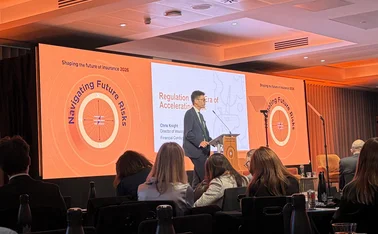
FCA’s Knight updates on cyber insurance report
Chris Knight, director of insurance at the FCA, has updated on the progress of its report into the take up of cyber insurance, and how the regulator has to keep pace with technological advancements.
Growing FCA attestation appetite a warning for brokers
The Financial Conduct Authority has increased the level of attestation requests dished out to insurance firms in recent years, and the serious regulatory tool is one brokers need to keep a keen eye on according to compliance specialists.

Why insurer oversight cannot become another regulatory box-ticking exercise
With regulatory workloads continuing to grow and the FCA maintaining its focus on customer outcomes, Insurance DataLab co-founder Matt Scott explains why brokers need a practical, evidence-led approach to insurer oversight.

FCA cancels insurance distribution business’ permissions
The Financial Conduct Authority cancelled Professional Liability Network’s permission to carry out regulated activities on 11 September 2026.