

Unlimited liability
In addition to the financial rewards associated with being appointed to an executive or non-executive position comes additional personal liability for a negligent act. David Munro reports
In May 2004, 12 former Enron outside directors agreed to pay a combined total of $1.5m (£817,000) from their own pockets to settle a civil suit while, more recently, 11 former board members of WorldCom proposed to pay $20.2m, again from their own pockets, to settle a lawsuit related to the company's accounting fraud.
These settlements have fundamentally changed the directors' and officers' insurance market because, prior to these, companies and their insurers almost always paid. This change has sparked a surge in the level of demand for insurance that specifically covers the personal assets of directors.
Imposing personal liability on corporate directors beyond the scope of insurance coverage has, understandably, triggered widespread concern among the officers, directors, auditors and even mid-level managers of many companies. In an increasingly litigious society, shareholders, creditors, competitors, regulators and employees are all potential sources of legal action, with directors or officers held accountable for actual or alleged wrongful acts, errors or omissions, including negligent advice, mis-statement or improper disclosure.
Recent European directives, combined with various UK statutory offences, impose increased liabilities on directors and officers, with such legislation escalating the possibility of legal action against directors and officers. It is worth emphasising to anyone occupying a position of responsibility within a company that, unlike a company's liability, which could be limited, the liability of directors and officers might well be unlimited and that uninsured directors and officers could face the possibility of personal bankruptcy.
This is because the courts regard the directors of a company and the company itself as two separate entities. That is why, in order to protect the personal assets of individuals and to cover the costs of their defence, D&O cover should be widely used. In practice, however, this is often not the case.
Traditionally, D&O insurance has tended to be the kind of policy that many companies omit to cover. Nowadays, however, the Financial Services Authority requires general insurance brokers to make sure that they discuss D&O cover with their clients.
Such clients can negotiate a good deal for themselves by approaching a consultancy specialising in commercial business insurance. Recently, many insurance intermediaries have divested themselves of personal lines business in order to focus fully on commercial business exclusively - and that is the kind of insurance consultant that companies should approach for D&O cover.
In a recent case, the Securities and Futures Authority fined three former directors of an estate agency and provider of financial and property services for their respective roles in an aborted hostile takeover bid for a family of co-operative businesses. Each director admitted that they had failed to act with due skill, care and diligence in their dealing with confidential information received in preparation of the hostile bid and, as a result, incurred substantial costs.
In another case, 14 directors of a privately owned delivery business were banned following the company's insolvency and subsequent Department of Trade and Industry investigation. Although only two directors ran the business on a day-to-day basis, all were found to be responsible for the books and records not being up to the necessary standards and for a lack of working capital. Considerable defence costs were incurred to defend action against directors.
Few would argue that the legal environment for directors and officers in the UK is becoming increasingly hostile, with shareholders more willing to bring actions for breach of duty, coupled with regulatory bodies and government looking to hold directors personally responsible for their actions.
The duties of a director have been established through statutes, regulations and case law and can be broken down into various areas. The duty of care and skill, for example, is a common-law duty requiring directors to act with "the care an ordinary man would take in the same circumstances on his own behalf" and with the skill expected from someone with his "particular knowledge and experience".
Directors also have a fiduciary duty to act honestly, in good faith and in the best interests of the company and must ensure that he does not have any conflict of interest. There are also many statutes that affect the conduct of directors and officers, including the Companies Act 1985, Insolvency Act 1986, Financial Services Act 1986, Environmental Protection Act 1990, Health and Safety at Work Act 1974, to name a few.
If a director is perceived to have failed in any of their duties, then a claim could come from any number of third-party sources, including shareholders, creditors, regulatory bodies, employees, auditors, liquidators, customers and suppliers.
Directors will remember that the Companies Act has over 250 civil and criminal offences with which directors can be charged, the budget for the Office of Fair Trading is expected to rise by over 60% over the next three years, while there are various other items of legislation - including corporate manslaughter - that propose increased sanctions against directors in the event of any wrongdoing.
With actions against directors by the DTI having increased by more than 50% over the last four years, the message has to be that - if they have not already done so - directors and officers contact an experienced commercial broker about D&O insurance as a matter of urgency.
David Munro, Managing director, Munro Insurance Consultants.
Only users who have a paid subscription or are part of a corporate subscription are able to print or copy content.
To access these options, along with all other subscription benefits, please contact info@insuranceage.co.uk or view our subscription options here: https://subscriptions.insuranceage.co.uk/subscribe
You are currently unable to print this content. Please contact info@insuranceage.co.uk to find out more.
You are currently unable to copy this content. Please contact info@insuranceage.co.uk to find out more.
Copyright Infopro Digital Limited. All rights reserved.
As outlined in our terms and conditions, https://www.infopro-digital.com/terms-and-conditions/subscriptions/ (point 2.4), printing is limited to a single copy.
If you would like to purchase additional rights please email info@insuranceage.co.uk
Copyright Infopro Digital Limited. All rights reserved.
You may share this content using our article tools. As outlined in our terms and conditions, https://www.infopro-digital.com/terms-and-conditions/subscriptions/ (clause 2.4), an Authorised User may only make one copy of the materials for their own personal use. You must also comply with the restrictions in clause 2.5.
If you would like to purchase additional rights please email info@insuranceage.co.uk
More on Regulation

Which? demands ban on brokers charging high motor APRs
Which? has named and shamed motor insurance brokers charging high interest rates on monthly policies and called for a ban on the practice.

No ‘particular targets’ for insurance regulation simplification, says FCA
Consumer Duty will be a building block for any future work on the simplification of insurance regulations that affect brokers, according to David Geale, executive director of consumers, payments and competition at the Financial Conduct Authority.

FCA kicked off financial year with improved authorisation service bar one outlier
The Financial Conduct Authority has upped its game on authorisation service levels in categories affecting brokers, with improvements in four areas, but one notable outlier where the performance dipped.

FCA alerts of Kent-based broker clone
Quotemetoday.co.uk has made clear it has no affiliation with Quote Me Go as the Financial Conduct Authority has reported fraudsters have been impersonating the Kent-headquartered broker.
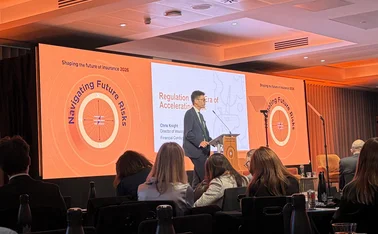
FCA’s Knight updates on cyber insurance report
Chris Knight, director of insurance at the FCA, has updated on the progress of its report into the take up of cyber insurance, and how the regulator has to keep pace with technological advancements.
Growing FCA attestation appetite a warning for brokers
The Financial Conduct Authority has increased the level of attestation requests dished out to insurance firms in recent years, and the serious regulatory tool is one brokers need to keep a keen eye on according to compliance specialists.

Why insurer oversight cannot become another regulatory box-ticking exercise
With regulatory workloads continuing to grow and the FCA maintaining its focus on customer outcomes, Insurance DataLab co-founder Matt Scott explains why brokers need a practical, evidence-led approach to insurer oversight.

FCA cancels insurance distribution business’ permissions
The Financial Conduct Authority cancelled Professional Liability Network’s permission to carry out regulated activities on 11 September 2026.