

Changing SMTs

Q. It is a legal obligation to provide my employees with a written SMT, so how do I make changes to articles?
Where there is a change in any of the particulars referred to in the statement of main terms of employment (SMT) after it has been given to the employee, legislation requires the employer to give a written statement containing details of the change or refer the employee to some other accessible document containing details of the change, such as an employee's handbook. Normally this must be done no later than one month after the change in question. As the employment relationship rarely stands still for long, such changes actually happen more often than you may think.
Usually this does not cause any problem, as the employer will often have complied with this provision without realising it. For example, pay increases will normally be reflected on pay slips and agreed changes to the hours or place of work resulting from the right to request flexible working will be notified in writing.
This is not always the case, as sometimes changes are only agreed verbally. Instances of this include employees moving within a company to a different role with a different job title, though nothing is put in writing to the employee. There are also two further circumstances where an employer is likely to fall foul of this requirement.
- Where the name of the employer is changed without there being any change in their identity.
- When the identity of the employer changes in circumstances where the employee's continuity of employment is not broken, such as a transfer of business or other undertaking.
In the latter case, the statement of change to be issued must specify the date on which the employee's period of continuous employment began, as well as the name of the new employer. In both cases, if there is also a change to any of the other matters included or referred to in the SMT, then a whole new SMT must be issued.
Until recently, the only consequence of a failure to issue a written statement of change was that the employee could refer the matter to tribunal, which could then deem the statement to include the relevant particulars. However, since 1 October 2004, where a tribunal finds in favour of an employee in relation to almost any claim made, other than a claim for failure to issue an SMT or statement of change, the tribunal must make an award of two weeks' pay. Subject to the statutory limit, the tribunal may make an award of up to four weeks' pay if there has been a breach of these requirements unless exceptional circumstances apply.
Four weeks multiplied by £310, the current maximum, equals £1 240 per employee. This may not seem much but it can soon add up.
- Peter Done, Managing director, Peninsula Business Services.
Only users who have a paid subscription or are part of a corporate subscription are able to print or copy content.
To access these options, along with all other subscription benefits, please contact info@insuranceage.co.uk or view our subscription options here: https://subscriptions.insuranceage.co.uk/subscribe
You are currently unable to print this content. Please contact info@insuranceage.co.uk to find out more.
You are currently unable to copy this content. Please contact info@insuranceage.co.uk to find out more.
Copyright Infopro Digital Limited. All rights reserved.
As outlined in our terms and conditions, https://www.infopro-digital.com/terms-and-conditions/subscriptions/ (point 2.4), printing is limited to a single copy.
If you would like to purchase additional rights please email info@insuranceage.co.uk
Copyright Infopro Digital Limited. All rights reserved.
You may share this content using our article tools. As outlined in our terms and conditions, https://www.infopro-digital.com/terms-and-conditions/subscriptions/ (clause 2.4), an Authorised User may only make one copy of the materials for their own personal use. You must also comply with the restrictions in clause 2.5.
If you would like to purchase additional rights please email info@insuranceage.co.uk
More on Regulation

Which? demands ban on brokers charging high motor APRs
Which? has named and shamed motor insurance brokers charging high interest rates on monthly policies and called for a ban on the practice.

No ‘particular targets’ for insurance regulation simplification, says FCA
Consumer Duty will be a building block for any future work on the simplification of insurance regulations that affect brokers, according to David Geale, executive director of consumers, payments and competition at the Financial Conduct Authority.

FCA kicked off financial year with improved authorisation service bar one outlier
The Financial Conduct Authority has upped its game on authorisation service levels in categories affecting brokers, with improvements in four areas, but one notable outlier where the performance dipped.

FCA alerts of Kent-based broker clone
Quotemetoday.co.uk has made clear it has no affiliation with Quote Me Go as the Financial Conduct Authority has reported fraudsters have been impersonating the Kent-headquartered broker.
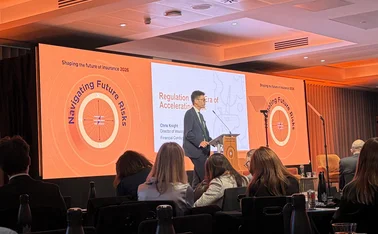
FCA’s Knight updates on cyber insurance report
Chris Knight, director of insurance at the FCA, has updated on the progress of its report into the take up of cyber insurance, and how the regulator has to keep pace with technological advancements.
Growing FCA attestation appetite a warning for brokers
The Financial Conduct Authority has increased the level of attestation requests dished out to insurance firms in recent years, and the serious regulatory tool is one brokers need to keep a keen eye on according to compliance specialists.

Why insurer oversight cannot become another regulatory box-ticking exercise
With regulatory workloads continuing to grow and the FCA maintaining its focus on customer outcomes, Insurance DataLab co-founder Matt Scott explains why brokers need a practical, evidence-led approach to insurer oversight.

FCA cancels insurance distribution business’ permissions
The Financial Conduct Authority cancelled Professional Liability Network’s permission to carry out regulated activities on 11 September 2026.