

Too little, too late?
Network failures are indirectly preventing the secondary sector from receiving the support it needs from the primary market
At this year's annual British Insurance Brokers' Association Conference, it was demonstrated that knowledge in the secondary market is very low.
The Financial Services Authority's key task during the coming months will be to raise awareness among secondary intermediaries. But, with less than a month until the cut-off date for a guaranteed turnaround of applications by 14 January 2005 - is the message too little too late?
The secondary market is said to be worth £3bn. If insurers have little appetite for appointed representatives, there is a stark choice - be regulated or form part of a network, which is why SA launched its secondary network earlier this year.
Direct regulation would surely only appeal to those large businesses with a high income from insurance. One might argue, if directly regulated by the FSA, why any business such as this would continue to deal with a broker at all. Most insurers would have no qualms giving a direct agency to those directly regulated. This could lead to a significant reduction in certain brokers' incomes.
And do medium-sized firms want to be directly authorised, have direct agencies with insurers, to become an insurance broker? Many would like help, assistance and expertise with this.
Post-regulation, many argue that the secondary market will stop dealing with insurance. This surely underestimates how important this income has become. Will managing agents who depend on this income exit this market completely? Will they wish to become directly authorised by the FSA? This is not just a problem for managing agents. Many types of businesses are concerned about the future.
This is a huge opportunity for the primary market, one that currently is being missed. Support is needed from insurers and more can be done, as the FSA has promised, to raise awareness. The rules will not change - this is an issue that needs addressing.
Much debate and discussion has ensued about the amount of broker networks launched last year and either their success or lack of it. Has this left the primary market shy of attempting to fulfil the markets needs? It would appear so.
Only users who have a paid subscription or are part of a corporate subscription are able to print or copy content.
To access these options, along with all other subscription benefits, please contact info@insuranceage.co.uk or view our subscription options here: https://subscriptions.insuranceage.co.uk/subscribe
You are currently unable to print this content. Please contact info@insuranceage.co.uk to find out more.
You are currently unable to copy this content. Please contact info@insuranceage.co.uk to find out more.
Copyright Infopro Digital Limited. All rights reserved.
As outlined in our terms and conditions, https://www.infopro-digital.com/terms-and-conditions/subscriptions/ (point 2.4), printing is limited to a single copy.
If you would like to purchase additional rights please email info@insuranceage.co.uk
Copyright Infopro Digital Limited. All rights reserved.
You may share this content using our article tools. As outlined in our terms and conditions, https://www.infopro-digital.com/terms-and-conditions/subscriptions/ (clause 2.4), an Authorised User may only make one copy of the materials for their own personal use. You must also comply with the restrictions in clause 2.5.
If you would like to purchase additional rights please email info@insuranceage.co.uk
More on Regulation

Which? demands ban on brokers charging high motor APRs
Which? has named and shamed motor insurance brokers charging high interest rates on monthly policies and called for a ban on the practice.

No ‘particular targets’ for insurance regulation simplification, says FCA
Consumer Duty will be a building block for any future work on the simplification of insurance regulations that affect brokers, according to David Geale, executive director of consumers, payments and competition at the Financial Conduct Authority.

FCA kicked off financial year with improved authorisation service bar one outlier
The Financial Conduct Authority has upped its game on authorisation service levels in categories affecting brokers, with improvements in four areas, but one notable outlier where the performance dipped.

FCA alerts of Kent-based broker clone
Quotemetoday.co.uk has made clear it has no affiliation with Quote Me Go as the Financial Conduct Authority has reported fraudsters have been impersonating the Kent-headquartered broker.
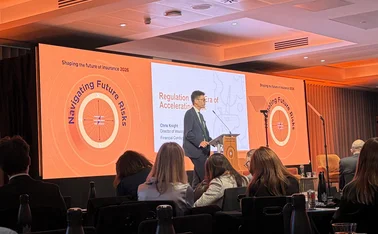
FCA’s Knight updates on cyber insurance report
Chris Knight, director of insurance at the FCA, has updated on the progress of its report into the take up of cyber insurance, and how the regulator has to keep pace with technological advancements.

Growing FCA attestation appetite a warning for brokers
The Financial Conduct Authority has increased the level of attestation requests dished out to insurance firms in recent years, and the serious regulatory tool is one brokers need to keep a keen eye on according to compliance specialists.

Why insurer oversight cannot become another regulatory box-ticking exercise
With regulatory workloads continuing to grow and the FCA maintaining its focus on customer outcomes, Insurance DataLab co-founder Matt Scott explains why brokers need a practical, evidence-led approach to insurer oversight.

FCA cancels insurance distribution business’ permissions
The Financial Conduct Authority cancelled Professional Liability Network’s permission to carry out regulated activities on 11 September 2026.