

Disclosure encounters of a different kind
Tentative proposals fo reforming non-disclosure and misrepresentation could mean a simplification of position for brokers
In September, the Law Commission published its first Issues Paper, setting out tentative proposals for reforming non-disclosure and misrepresentation, as part of a major overhaul of insurance contract law. Driving the reform is the desire to give policyholders a fairer deal.
The headline proposal is to replace the duty of disclosure, at least for consumers, with a requirement for insurers to ask specific questions. Consumers would, therefore, only need to answer accurately the questions they are asked. If insurers do not ask a specific question, they would be regarded as having waived their right to such information. For businesses, however, the duty of disclosure would be retained.
While bringing the law into line with guidance from the Financial Ombudsman Service, in practice this suggestion is likely to create longer, more tightly worded proposal forms.
On renewal, insurers would also need to include the content of answers previously given. For brokers, this may simplify their position, the key requirement being to advise on the full scope of the questions being asked.
Any misrepresentation would then be measured against a proposed test for materiality which would require the insurer to show both actual inducement and that the insured appreciated that the fact in question would have that significance or that a reasonable insured in the circumstances would have so appreciated.
The advice received from brokers ought to influence the insured's appreciation of the significance of the questions being asked.
As far as remedies are concerned, it is proposed that these would depend on whether the misrepresentation was fraudulent, negligent or innocent, again following the lead of the Financial Ombudsman Service.
Only where there is fraud would insurers be able to avoid the policy. Even then, the proposed test would also require insurers to show that the insured knew that the statement was material to the insurer.
Where innocent, the insurer would have no remedy. For the middle ground of negligent misrepresentation, it is suggested that the court should look at what the insurer would have done, had it known the true facts. If it would have declined the risk or added an exclusion, the claim could still be refused.
If a higher premium would have been charged, the claim would be reduced proportionately.
A second 'issues' paper on warranties is expected in November and the first of two consultation papers is anticipated next summer. Further issues papers are expected in 2007, including on agency, and a second consultation paper in 2008. A final report and draft Bill is suggested for 2010.
Only users who have a paid subscription or are part of a corporate subscription are able to print or copy content.
To access these options, along with all other subscription benefits, please contact info@insuranceage.co.uk or view our subscription options here: https://subscriptions.insuranceage.co.uk/subscribe
You are currently unable to print this content. Please contact info@insuranceage.co.uk to find out more.
You are currently unable to copy this content. Please contact info@insuranceage.co.uk to find out more.
Copyright Infopro Digital Limited. All rights reserved.
As outlined in our terms and conditions, https://www.infopro-digital.com/terms-and-conditions/subscriptions/ (point 2.4), printing is limited to a single copy.
If you would like to purchase additional rights please email info@insuranceage.co.uk
Copyright Infopro Digital Limited. All rights reserved.
You may share this content using our article tools. As outlined in our terms and conditions, https://www.infopro-digital.com/terms-and-conditions/subscriptions/ (clause 2.4), an Authorised User may only make one copy of the materials for their own personal use. You must also comply with the restrictions in clause 2.5.
If you would like to purchase additional rights please email info@insuranceage.co.uk
More on Regulation

Which? demands ban on brokers charging high motor APRs
Which? has named and shamed motor insurance brokers charging high interest rates on monthly policies and called for a ban on the practice.

No ‘particular targets’ for insurance regulation simplification, says FCA
Consumer Duty will be a building block for any future work on the simplification of insurance regulations that affect brokers, according to David Geale, executive director of consumers, payments and competition at the Financial Conduct Authority.

FCA kicked off financial year with improved authorisation service bar one outlier
The Financial Conduct Authority has upped its game on authorisation service levels in categories affecting brokers, with improvements in four areas, but one notable outlier where the performance dipped.

FCA alerts of Kent-based broker clone
Quotemetoday.co.uk has made clear it has no affiliation with Quote Me Go as the Financial Conduct Authority has reported fraudsters have been impersonating the Kent-headquartered broker.
FCA’s Knight updates on cyber insurance report
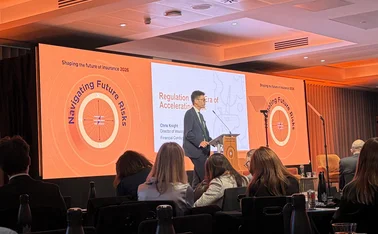
Chris Knight, director of insurance at the FCA, has updated on the progress of its report into the take up of cyber insurance, and how the regulator has to keep pace with technological advancements.
Growing FCA attestation appetite a warning for brokers
The Financial Conduct Authority has increased the level of attestation requests dished out to insurance firms in recent years, and the serious regulatory tool is one brokers need to keep a keen eye on according to compliance specialists.

Why insurer oversight cannot become another regulatory box-ticking exercise
With regulatory workloads continuing to grow and the FCA maintaining its focus on customer outcomes, Insurance DataLab co-founder Matt Scott explains why brokers need a practical, evidence-led approach to insurer oversight.

FCA cancels insurance distribution business’ permissions
The Financial Conduct Authority cancelled Professional Liability Network’s permission to carry out regulated activities on 11 September 2026.