

Spitzer fallout set to hit UK
Although the US mutual-funds scandal hit the headlines in the US more than 12 months ago, its impact on the UK insurance market is only now beginning to be felt
Mutual funds are collective investment schemes specifically designed to give US private investors access to a wide range of other stocks and shares. Over 95 million Americans have approximately $7trn (£3.7trn) invested in mutual funds.
The US mutual-funds investigation has been led by New York State Attorney General, Eliot Spitzer. The allegations are that mutual funds and brokers have engaged in 'market timing' and 'late trading'. Trading in mutual funds should finish at 4pm Eastern Standard Time each day and the mutual-fund share will have a nominal closing price at that time. Market timing is essentially using price-sensitive information acquired after trading has ceased, which affects the value of the mutual-fund shares before their actual value is calculated when the market opens the following day. Market timing is not illegal but most mutual funds have a public policy prohibiting such practices.
Late trading involves allowing orders made after 4pm to be processed and treated as if they had been made before the 4pm deadline. Traders can, again, take advantage of information known to them, which affects the value of the mutual fund's assets and, consequently, the actual closing value of the mutual fund itself. Late trading is a criminal offence. Sophisticated professional investors have used these practices to make huge profits at the expense of less sophisticated private investors.
The mutual-funds scandal has resulted in class-action lawsuits in the US involving many of the largest names in investment, including Canary Capital, Janus Capital, Invesco and Putnam. The class actions have already resulted in large settlements of up to $250m in fines to the US authorities and in compensation to private investors. More settlements are expected.
The impact of these settlements will be felt in the UK in the context of both directors' and officers' and and errors and omissions policies.
The US class actions frequently involve allegations of criminal and fraudulent practices by the mutual funds, their directors and officers, as well as the brokers. Therefore, much importance will be attached to policy wordings and exclusions in ascertaining cover for liabilities when they hit the London reinsurance market. This is a situation many brokers may want to monitor closely.
Only users who have a paid subscription or are part of a corporate subscription are able to print or copy content.
To access these options, along with all other subscription benefits, please contact info@insuranceage.co.uk or view our subscription options here: https://subscriptions.insuranceage.co.uk/subscribe
You are currently unable to print this content. Please contact info@insuranceage.co.uk to find out more.
You are currently unable to copy this content. Please contact info@insuranceage.co.uk to find out more.
Copyright Infopro Digital Limited. All rights reserved.
As outlined in our terms and conditions, https://www.infopro-digital.com/terms-and-conditions/subscriptions/ (point 2.4), printing is limited to a single copy.
If you would like to purchase additional rights please email info@insuranceage.co.uk
Copyright Infopro Digital Limited. All rights reserved.
You may share this content using our article tools. As outlined in our terms and conditions, https://www.infopro-digital.com/terms-and-conditions/subscriptions/ (clause 2.4), an Authorised User may only make one copy of the materials for their own personal use. You must also comply with the restrictions in clause 2.5.
If you would like to purchase additional rights please email info@insuranceage.co.uk
More on Regulation

Which? demands ban on brokers charging high motor APRs
Which? has named and shamed motor insurance brokers charging high interest rates on monthly policies and called for a ban on the practice.

No ‘particular targets’ for insurance regulation simplification, says FCA
Consumer Duty will be a building block for any future work on the simplification of insurance regulations that affect brokers, according to David Geale, executive director of consumers, payments and competition at the Financial Conduct Authority.

FCA kicked off financial year with improved authorisation service bar one outlier
The Financial Conduct Authority has upped its game on authorisation service levels in categories affecting brokers, with improvements in four areas, but one notable outlier where the performance dipped.

FCA alerts of Kent-based broker clone
Quotemetoday.co.uk has made clear it has no affiliation with Quote Me Go as the Financial Conduct Authority has reported fraudsters have been impersonating the Kent-headquartered broker.
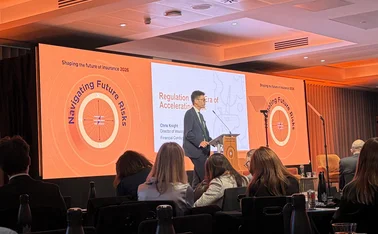
FCA’s Knight updates on cyber insurance report
Chris Knight, director of insurance at the FCA, has updated on the progress of its report into the take up of cyber insurance, and how the regulator has to keep pace with technological advancements.
Growing FCA attestation appetite a warning for brokers
The Financial Conduct Authority has increased the level of attestation requests dished out to insurance firms in recent years, and the serious regulatory tool is one brokers need to keep a keen eye on according to compliance specialists.

Why insurer oversight cannot become another regulatory box-ticking exercise
With regulatory workloads continuing to grow and the FCA maintaining its focus on customer outcomes, Insurance DataLab co-founder Matt Scott explains why brokers need a practical, evidence-led approach to insurer oversight.

FCA cancels insurance distribution business’ permissions
The Financial Conduct Authority cancelled Professional Liability Network’s permission to carry out regulated activities on 11 September 2026.