

Attendance rules

Q. An employee who is always late is starting a trend and our attendance figures are falling. What can I do to address the issue?
You need to have clear, documented disciplinary rules. All employees should be told about these rules when they start work and reminded of them from time to time. You need to do this for three reasons. The first is so your staff know what is required of them. The second is so you comply with the statutory disputes resolution procedures. Thirdly, timekeeping and absence problems are cancerous if you do not take action, other employees, who will be very aware of the miscreant's behaviour and, seeing nothing being done by management - possibly even having to do extra work because of the lateness/absence - will start to operate on a "me too" basis.
You should write to the unpunctual employee explaining your concerns about his timekeeping, giving the dates and details of his lateness and ask him to attend a meeting. Explain in the letter that at the meeting he will have: the right to state his case; the right to be accompanied/represented by a fellow employee or trade union representative; and the right to appeal if you take a decision he disagrees with. The letter should contain full details of the lateness, for example, day, date, due start time and actual start time. Look for any patterns. Notify him of when and where the meeting is to take place and give him adequate time to prepare. If you intend to rely on any documentation, such as clock card entries, provide him with copies. Finally, warn him in the letter that if he cannot provide a satisfactory explanation, he will be receiving an official warning. The level of this depends on the severity of the offence. Hold the meeting at the specified time and date, remind him of his rights at the start, and ensure you have a competent note taker.
If you take time and trouble to prepare a detailed letter at the commencement of proceedings it will benefit you in two ways. Firstly, it becomes an aide-memoir and you can work from it at the hearing and for the final decision letter whatever that might be. Secondly, the importance of the letter and the fact that it should be properly constructed, complying with both your contractual terms and conditions, and the requirements of the statutory disputes resolution procedures. Therefore, should it end in tribunal, the letter will assist you because you have the advantage of professional, compliant documents and procedures.
See the full version of this answer at http://www.professionalbroking.com.
Only users who have a paid subscription or are part of a corporate subscription are able to print or copy content.
To access these options, along with all other subscription benefits, please contact info@insuranceage.co.uk or view our subscription options here: https://subscriptions.insuranceage.co.uk/subscribe
You are currently unable to print this content. Please contact info@insuranceage.co.uk to find out more.
You are currently unable to copy this content. Please contact info@insuranceage.co.uk to find out more.
Copyright Infopro Digital Limited. All rights reserved.
As outlined in our terms and conditions, https://www.infopro-digital.com/terms-and-conditions/subscriptions/ (point 2.4), printing is limited to a single copy.
If you would like to purchase additional rights please email info@insuranceage.co.uk
Copyright Infopro Digital Limited. All rights reserved.
You may share this content using our article tools. As outlined in our terms and conditions, https://www.infopro-digital.com/terms-and-conditions/subscriptions/ (clause 2.4), an Authorised User may only make one copy of the materials for their own personal use. You must also comply with the restrictions in clause 2.5.
If you would like to purchase additional rights please email info@insuranceage.co.uk
More on Regulation

Which? demands ban on brokers charging high motor APRs
Which? has named and shamed motor insurance brokers charging high interest rates on monthly policies and called for a ban on the practice.

No ‘particular targets’ for insurance regulation simplification, says FCA
Consumer Duty will be a building block for any future work on the simplification of insurance regulations that affect brokers, according to David Geale, executive director of consumers, payments and competition at the Financial Conduct Authority.

FCA kicked off financial year with improved authorisation service bar one outlier
The Financial Conduct Authority has upped its game on authorisation service levels in categories affecting brokers, with improvements in four areas, but one notable outlier where the performance dipped.

FCA alerts of Kent-based broker clone
Quotemetoday.co.uk has made clear it has no affiliation with Quote Me Go as the Financial Conduct Authority has reported fraudsters have been impersonating the Kent-headquartered broker.
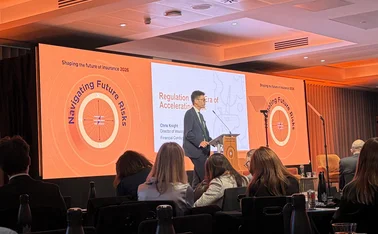
FCA’s Knight updates on cyber insurance report
Chris Knight, director of insurance at the FCA, has updated on the progress of its report into the take up of cyber insurance, and how the regulator has to keep pace with technological advancements.

Growing FCA attestation appetite a warning for brokers
The Financial Conduct Authority has increased the level of attestation requests dished out to insurance firms in recent years, and the serious regulatory tool is one brokers need to keep a keen eye on according to compliance specialists.

Why insurer oversight cannot become another regulatory box-ticking exercise
With regulatory workloads continuing to grow and the FCA maintaining its focus on customer outcomes, Insurance DataLab co-founder Matt Scott explains why brokers need a practical, evidence-led approach to insurer oversight.

FCA cancels insurance distribution business’ permissions
The Financial Conduct Authority cancelled Professional Liability Network’s permission to carry out regulated activities on 11 September 2026.