

Locking in the new laws
If your landlord is of an adventurous nature, from 25 November, you'll be able to drink in your local any time of the day. Andrew Tjaardstra examines the insurance implications for Welsh and English pubs and restaurants as the government implements its radical and controversial new drinking laws
The shake-up in licensing laws mean that whether an establishment selling alcohol wants to apply for the same licence again, an extension or the full 24-hour licence, they must reapply or face prosecution. And the spectrum is broad, covering restaurants - from Michelin Star-rated to fast food, public houses, music venues, cinemas and theatres.
Although the original deadline for applications was 6 August 2005, there are still thousands of applications being processed. Brokers will empathise with tales of landlords staying up late in order to fill out their applications.
A spokesperson at the Department of Culture, which oversees the alcohol and entertainment industry, told Professional Broking that 80% of licences had been renewed by 6 August and, at the time of going to press, 86% of licensees had applied out of a total of 130,000. The turnaround of a licence takes approximately two months, as local residents have 28 days in which to respond, and then the local authority needs to approve the application.
There are many considerations for local authorities to consider such as noise pollution, children's safety and public opinion.
Two new licences have been introduced, a personal licence and a premise licence. Large pub chains will often hold the premise licence, while landlords can apply for a personal licence. The government says the law will save businesses money because they will only need to apply once, unless they decide to change their licence. However, fees have also upped, with the largest city pubs paying £1905 for an initial application fee and a £1050 annual fee.
The move by the government has caused uproar across the country and has been pushed through despite Tony Blair writing the foreword to last year's National Alcohol Harm Reduction Strategy document, which estimated heavy drinking costs the country £20bn a year, with a £7bn bill for criminality and £1.7bn to cope with the health consequences.
Clearly, the government has come to the conclusion we need a change in tactics and calls the previous licensing laws, which date back to the First World War 'archaic'. A future rise in insurance claims could be one indicator of how well the policy is working.
Despite the chance of more risks, the insurance industry is not rushing to raise premiums as licensing hours increase.
Dave Lamb, underwriting director for agriculture and leisure at Norwich Union, is pragmatic about the change in the law, partly because pubs have not been rushing to extend opening hours dramatically. He says: "We are waiting to see what changes will happen. Pubs will look for licensing hours to suit customers, for example, sports bars may stay open later to cover certain events. However, there will not necessarily be an increase in risk."
He adds insurance contracts, which have already been negotiated, would remain the same. Lamb says there have been precedents set by village halls opening late, however, he says insurers may reassess if pubs start to open late on Friday, Saturday and Sunday.
The large proportion of pub chains that have self-insurance for public liability is one of the reasons why insurers are not hiking up rates according to Paul Abbott, client advocate at Willis. He says the average claim in this area is between £4000 and £5000, while deductibles on policies are far greater, sometimes between £10,000 and £25,000. Therefore, often the insurance company is not troubled in the first place.
Abbott, who helps broker for several high-profile pub chains, believes premiums will only rise depending on the number of claims. However, he suggests smaller insurance companies may see opportunities to up rates for individual licensees at single-premise pubs.
However, Abbott says: "The average frequency for a public liability claim in a pub is one in every five years."
Other insurers are also adopting a reactionary approach, rather than a pre-emptive strike. A spokesperson at Zurich, for example, says the insurer will continue to monitor developments and any significant changes in claims experience will be taken into account when selecting or pricing risks. Zurich also said it would provide assistance to its partners in the hospitality trades if specific support or guidance is requested.
Potential risk increase
With premiums unlikely to rise, there are still hazards that will be exemplified by pubs and restaurants opening for longer hours.
Even opening for breakfast could up claims as trips and falls - which cause a large proportion of pub claims - do not only happen as a result of drunkenness. Some of these claims are fraudulent and Abbott cites improvements in technology, such as the use of video cameras in pubs to prove the pub was not at fault.
Lamb warns: "There are a great deal of practical considerations for pub managers such as the amount of cash on the premises could increase, cleaning regimes will change and there may be less time to carry out property maintenance."
Large quantities of cash and also stock on the premises may undermine business interruption cover. Also, cleanliness and aspects such as the location of bar stools and functioning of machines is needed to be maintained in order to secure a high level of health and safety.
There may also be a change in clientele. If pubs start to open later and charge on the door while 'serving up' loud music, then there could be the need for brokers and insurers to take action and reassess risks and premiums.
Pubs should also be aware of the insurance costs of bouncers and security staff as, according to Abbott, a recent court case against an agency resulted in the court determining those "who control their method of work" as responsible for the employer's liability.
David Turner, operations director at Regent's Inn, says: "From 8:00pm onwards, if there are 150 people inside, you need at least two doormen and you need another person on the door for every 100 more. If you stay open later, you may also need more closed-circuit television cameras."
He adds: "It is also important that doormen are legitimate and are signed up to the Securities Industry Act, which was introduced last year."
Half full or half empty?
Despite massive press coverage and a great deal of excitement, there have been relatively few establishments wanting to open 24 hours a day, seven days a week.
A spokesperson for the pub chain Punch Taverns, which owns 8200 pub premises and leases them out, says only 0.67% of its pubs have shown an interest in 24-hour licensing laws.
Despite this apathy, in some instances, police have been actively encouraging pubs to stay open in order to congregate drinkers in one place. Turner expressed surprise when the police approached him requesting three pubs remain open all day, but was responsive to the police's point of view, no doubt spotting a business opportunity. Turner says: "We are considering opening two of our premises in Birmingham and one in Plymouth for 24 hours after the police contacted us. They want to stagger the end of the night, so some drinkers can carry on drinking, while others can go home." However, he still expects, as a general rule, that the hours between three and six will be 'dead'.
Turner says his pubs, of which there are 77 across the country, including Walkabouts, have opened at 6:00am in order to show live Australian sporting events.
For those wishing to go 'all the way', there are strict rules to consider. Turner says: "If you want to stay open 24 hours, you will need to give the police 48 hours' notice and are required to close down for at least two hours for staff to clean the premises."
Despite a small number of cases, there has been a deluge of headlines in the national press highlighting that pubs are not opting for 24-hour drinking. Pubs that have chosen to go all the way have become high profile. For example, The Crescent in Salford became one of the first pubs in Greater Manchester to take advantage of the rules.
According to a spokesperson at Birmingham City Council, there have been around 20 requests for 24 hour licenses, mainly from hotels, which - traditionally - have been open for longer. Meanwhile, 641 premises out of 2500 are extending their hours.
Full extent
The full impact on insurance of the new licensing laws will not become clear until next year, especially as pubs are still deliberating about how late they will open. Also, it is unclear how popular late-night or early drinking will become and whether, after an initial surge of interest, the drinking public may become apathetic about the possibility of staying up all night. One thing is certain, creating a more mature drinking climate in the UK will take more than changing our supposedly archaic licensing hours. It will require a change in weather and a change in culture, however, we are drinking less than our peers in 1900.
Only users who have a paid subscription or are part of a corporate subscription are able to print or copy content.
To access these options, along with all other subscription benefits, please contact info@insuranceage.co.uk or view our subscription options here: https://subscriptions.insuranceage.co.uk/subscribe
You are currently unable to print this content. Please contact info@insuranceage.co.uk to find out more.
You are currently unable to copy this content. Please contact info@insuranceage.co.uk to find out more.
Copyright Infopro Digital Limited. All rights reserved.
As outlined in our terms and conditions, https://www.infopro-digital.com/terms-and-conditions/subscriptions/ (point 2.4), printing is limited to a single copy.
If you would like to purchase additional rights please email info@insuranceage.co.uk
Copyright Infopro Digital Limited. All rights reserved.
You may share this content using our article tools. As outlined in our terms and conditions, https://www.infopro-digital.com/terms-and-conditions/subscriptions/ (clause 2.4), an Authorised User may only make one copy of the materials for their own personal use. You must also comply with the restrictions in clause 2.5.
If you would like to purchase additional rights please email info@insuranceage.co.uk
More on Regulation

Which? demands ban on brokers charging high motor APRs
Which? has named and shamed motor insurance brokers charging high interest rates on monthly policies and called for a ban on the practice.

No ‘particular targets’ for insurance regulation simplification, says FCA
Consumer Duty will be a building block for any future work on the simplification of insurance regulations that affect brokers, according to David Geale, executive director of consumers, payments and competition at the Financial Conduct Authority.

FCA kicked off financial year with improved authorisation service bar one outlier
The Financial Conduct Authority has upped its game on authorisation service levels in categories affecting brokers, with improvements in four areas, but one notable outlier where the performance dipped.
FCA alerts of Kent-based broker clone
Quotemetoday.co.uk has made clear it has no affiliation with Quote Me Go as the Financial Conduct Authority has reported fraudsters have been impersonating the Kent-headquartered broker.
FCA’s Knight updates on cyber insurance report
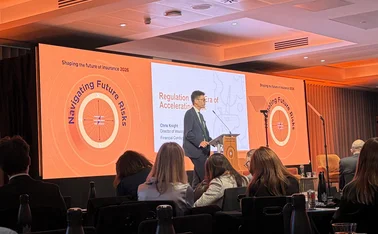
Chris Knight, director of insurance at the FCA, has updated on the progress of its report into the take up of cyber insurance, and how the regulator has to keep pace with technological advancements.
Growing FCA attestation appetite a warning for brokers
The Financial Conduct Authority has increased the level of attestation requests dished out to insurance firms in recent years, and the serious regulatory tool is one brokers need to keep a keen eye on according to compliance specialists.
Why insurer oversight cannot become another regulatory box-ticking exercise
With regulatory workloads continuing to grow and the FCA maintaining its focus on customer outcomes, Insurance DataLab co-founder Matt Scott explains why brokers need a practical, evidence-led approach to insurer oversight.

FCA cancels insurance distribution business’ permissions
The Financial Conduct Authority cancelled Professional Liability Network’s permission to carry out regulated activities on 11 September 2026.