

To claim or not to claim
It is not always the best option to claim for every claimable event, and swallowing the extra cost can actually save money at renewal. However, Peter Franklin says some claims are more appropriate than others
Businesses have been forced to alter their opinion of insurance. The collapse of Independent Insurance, tumbling stocks and 11 September are among various well-documented events that have indirectly contributed to insurance being pushed up the business agenda.
The resulting environment means brokers are rising to the challenge of helping clients manage risk. In addition to advising clients how to avoid claims, brokers are also informing them when it is advantageous not to claim even if they have cover.
The original purpose of insurance was to protect against catastrophe but, over the years, this changed, with many policies paying attritional losses and only occasionally a major loss. However, this trend is reversing back to insurers covering only major loss. And though insurance traditionally involved the losses of the few being paid for by the contributions of the many, recent years have seen the losses of the many exceeding these contributions.
Motor fleet excesses
Take, for example, motor fleets of 250 or more that are insured with only a nominal excess of £500. As insurance costs are rising, savings can be found if clients take a higher deductible. With a fleet of 250 vehicles, a deductible of £10,000 or £15,000 would eliminate most repair bills. Over a three to five-year period this should result in an overall saving as repair costs are likely to be less than that of a premium without a high deductible. This is because insurance companies handling smaller claims will add administrative costs as well as factoring in margins for profit. Many types of companies are considering handling claims as this can be 30% - 40% more expensive through an insurer.
Continuing the example of motor fleets, brokers need to make clients aware that repairers may be reluctant to accept instructions from companies they do not know. If a client wants to manage repairs direct with a repairer, it will take a while before they can carry out work on instruction without deposit. Until the repairer has had sufficient dealings and built up a relationship based on hassle-free transactions there may be delays. This is manageable but it does take time.
Even if incidents are covered within the deductible, clients need to inform the insurer. The underwriter needs to know the measure of the potential for loss, as claims that fall within a deductible could have exceeded the deductible limit.
When policies that have had attritional losses are reviewed, insurers will reserve for those types of incidents on a worst-case scenario. At renewal they will also anticipate an increase in cost due to inflation, and an increase in severity of incidents. Consequently, the insurer may well increase the premium in case of catastrophe loss.
Clients must, therefore, consider carefully whether to claim in every instance. Higher deductibles can help, although this makes the choice in advance.
Even so, it must be emphasised that client failure to disclose a material fact at the next renewal date could lead to the insurer claiming entitlement to avoid the policy.
If the insured discloses a large number of losses, whether claimed for or not, an insurer will take this into account when setting terms for next year. Clients must disclose all relevant policy information to all insurers - this is often overlooked when clients have policies with different insurers that cover the same perils.
Not claiming for a one-off loss can sometimes be the best approach. However, when advising clients whether to claim or not, brokers cannot give any guarantee on the affect this may have at renewal, bearing in mind a disclosure has to be made at the time. Although brokers can make a recommendation based on their experience and skill, subsequent events may change this position.
Not claiming is becoming an increasingly viable option, but is usually being catered for by higher deductibles either on a voluntary or imposed basis. Brokers need to be cautious so clients do not hold them to blame if insurers subsequently decide to impose an increase at renewal despite there being no claims.
| Appropriate claims The types of losses where it may be appropriate not to claim are: • if the amount recoverable under the policy is less than the cost in paperwork and the insured's time in putting together details of proof of loss. Also if there are a number of these types of losses where the cost of claim may be exceeded by the insurer's administration costs • one-off minor claims that are not expected to recur on a regular basis • claims under extensions that have been specifically negotiated and where insurers have been wary of granting the extended cover. |
Only users who have a paid subscription or are part of a corporate subscription are able to print or copy content.
To access these options, along with all other subscription benefits, please contact info@insuranceage.co.uk or view our subscription options here: https://subscriptions.insuranceage.co.uk/subscribe
You are currently unable to print this content. Please contact info@insuranceage.co.uk to find out more.
You are currently unable to copy this content. Please contact info@insuranceage.co.uk to find out more.
Copyright Infopro Digital Limited. All rights reserved.
As outlined in our terms and conditions, https://www.infopro-digital.com/terms-and-conditions/subscriptions/ (point 2.4), printing is limited to a single copy.
If you would like to purchase additional rights please email info@insuranceage.co.uk
Copyright Infopro Digital Limited. All rights reserved.
You may share this content using our article tools. As outlined in our terms and conditions, https://www.infopro-digital.com/terms-and-conditions/subscriptions/ (clause 2.4), an Authorised User may only make one copy of the materials for their own personal use. You must also comply with the restrictions in clause 2.5.
If you would like to purchase additional rights please email info@insuranceage.co.uk
More on Regulation

Which? demands ban on brokers charging high motor APRs
Which? has named and shamed motor insurance brokers charging high interest rates on monthly policies and called for a ban on the practice.

No ‘particular targets’ for insurance regulation simplification, says FCA
Consumer Duty will be a building block for any future work on the simplification of insurance regulations that affect brokers, according to David Geale, executive director of consumers, payments and competition at the Financial Conduct Authority.

FCA kicked off financial year with improved authorisation service bar one outlier
The Financial Conduct Authority has upped its game on authorisation service levels in categories affecting brokers, with improvements in four areas, but one notable outlier where the performance dipped.

FCA alerts of Kent-based broker clone
Quotemetoday.co.uk has made clear it has no affiliation with Quote Me Go as the Financial Conduct Authority has reported fraudsters have been impersonating the Kent-headquartered broker.
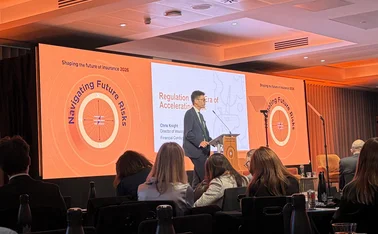
FCA’s Knight updates on cyber insurance report
Chris Knight, director of insurance at the FCA, has updated on the progress of its report into the take up of cyber insurance, and how the regulator has to keep pace with technological advancements.
Growing FCA attestation appetite a warning for brokers
The Financial Conduct Authority has increased the level of attestation requests dished out to insurance firms in recent years, and the serious regulatory tool is one brokers need to keep a keen eye on according to compliance specialists.

Why insurer oversight cannot become another regulatory box-ticking exercise
With regulatory workloads continuing to grow and the FCA maintaining its focus on customer outcomes, Insurance DataLab co-founder Matt Scott explains why brokers need a practical, evidence-led approach to insurer oversight.

FCA cancels insurance distribution business’ permissions
The Financial Conduct Authority cancelled Professional Liability Network’s permission to carry out regulated activities on 11 September 2026.