

Stability is the way forward
Don't let price fixation destroy the industry's efforts to get back on track
As direct sales continue to erode broker share in the personal lines motor market, the commercial sector is falling prey to the same expectations for value and downward pressure on price.
The fleet sector, in particular, has been subject to accusations about price undercutting. Instead of fanning the flames of debate, the insurance industry should learn lessons from history and maintain current price stability.
Market conditions during 2001 and 2002 resulted in good margins. While the market threatened to show signs of softening earlier this year, it has now stabilised, and there is solid evidence that fleet rates are rising again.
As so often happens when at the top of the underwriting cycle, however, people have now begun to talk prices down. The industry has spent so long reaching this point that to throw it off course with knee-jerk reactions to hyperbole would be senseless.
The fleet sector has spent the past few years getting back on track. The industry must learn from this and stand firm to create a long-lasting plateau based on strong pricing and underwriting control.
While none of us wants to lose money, the squeeze on stock market returns and dwindling interest rates mean insurers do not have much room for manoeuvre.
There are no spare capital reserves to cushion misguided underwriting decisions. Quality of risk is key to sustainability, as profitability becomes the driving force.
The market has come a long way in improving its pricing and underwriting disciplines during the past year and insurers and intermediaries are starting to produce comprehensive case fact finders. If the industry understands risk exposures better it can reflect them in the terms applied and pricing.
Acquiring new business can lead to lower profit margins but the market must not let this descend into the soft market behaviour that has been so damaging in the past. As long as claims inflation can be kept under control, insurers' current account profitability can be sustained.
Only users who have a paid subscription or are part of a corporate subscription are able to print or copy content.
To access these options, along with all other subscription benefits, please contact info@insuranceage.co.uk or view our subscription options here: https://subscriptions.insuranceage.co.uk/subscribe
You are currently unable to print this content. Please contact info@insuranceage.co.uk to find out more.
You are currently unable to copy this content. Please contact info@insuranceage.co.uk to find out more.
Copyright Infopro Digital Limited. All rights reserved.
As outlined in our terms and conditions, https://www.infopro-digital.com/terms-and-conditions/subscriptions/ (point 2.4), printing is limited to a single copy.
If you would like to purchase additional rights please email info@insuranceage.co.uk
Copyright Infopro Digital Limited. All rights reserved.
You may share this content using our article tools. As outlined in our terms and conditions, https://www.infopro-digital.com/terms-and-conditions/subscriptions/ (clause 2.4), an Authorised User may only make one copy of the materials for their own personal use. You must also comply with the restrictions in clause 2.5.
If you would like to purchase additional rights please email info@insuranceage.co.uk
More on Regulation

Which? demands ban on brokers charging high motor APRs
Which? has named and shamed motor insurance brokers charging high interest rates on monthly policies and called for a ban on the practice.

No ‘particular targets’ for insurance regulation simplification, says FCA
Consumer Duty will be a building block for any future work on the simplification of insurance regulations that affect brokers, according to David Geale, executive director of consumers, payments and competition at the Financial Conduct Authority.

FCA kicked off financial year with improved authorisation service bar one outlier
The Financial Conduct Authority has upped its game on authorisation service levels in categories affecting brokers, with improvements in four areas, but one notable outlier where the performance dipped.

FCA alerts of Kent-based broker clone
Quotemetoday.co.uk has made clear it has no affiliation with Quote Me Go as the Financial Conduct Authority has reported fraudsters have been impersonating the Kent-headquartered broker.
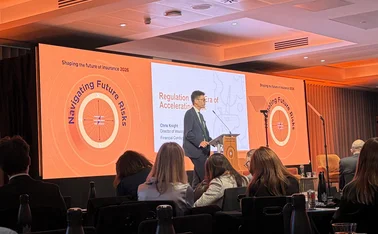
FCA’s Knight updates on cyber insurance report
Chris Knight, director of insurance at the FCA, has updated on the progress of its report into the take up of cyber insurance, and how the regulator has to keep pace with technological advancements.

Growing FCA attestation appetite a warning for brokers
The Financial Conduct Authority has increased the level of attestation requests dished out to insurance firms in recent years, and the serious regulatory tool is one brokers need to keep a keen eye on according to compliance specialists.

Why insurer oversight cannot become another regulatory box-ticking exercise
With regulatory workloads continuing to grow and the FCA maintaining its focus on customer outcomes, Insurance DataLab co-founder Matt Scott explains why brokers need a practical, evidence-led approach to insurer oversight.

FCA cancels insurance distribution business’ permissions
The Financial Conduct Authority cancelled Professional Liability Network’s permission to carry out regulated activities on 11 September 2026.