

Letting a network work for you
While some networks have come and gone, some compelling arguments remain in favour of the survivors and their brokers
I am always surprised when brokers say that they can manage without being in a network. Only when they feel they can no longer manage, would they consider signing up to one.
A network comprises a large number of relatively small firms, most of which are owner-managed businesses. It would be unusual for such firms to have much in the way of spare capacity in which to address anything other than the day-to-day running of the business. Tasks such as marketing the business, becoming and remaining compliant, getting to grips with the latest changes in employment legislation and negotiating agency terms with insurers inevitably fall on the shoulders of the principals who have to try fit them into their busy schedules.
Instead of carrying out the work themselves, brokers can let a network do it for them. And, because the network only has to do the work once and can cascade the results to all their member firms, it is a very cost-effective way of doing business.
For example, under Financial Services Authority rules, all brokers need a terms-of-business agreement with their customers. The document needs to address all the requirements of the FSA at the same time as ensuring that the broker's own needs are considered. It is very easy for a network to create a common set of such documents for its members to use. The work will invariably be carried out by someone who spends all their time on regulatory matters, supported by someone who understands the practicalities of being a both a broker and someone from IT.
Compare this to an individual broker who will first have to get to grips with what the regulation requires, then see how this fits into the way he prefers to run the business and, finally, draft the actual words needed.
Finally, after all this, he will have to work out how to get it onto his IT system.
Who do you think is likely to do the better job? Who will take longest?
So why do many brokers appear to want to struggle with this sort of task independently?
It seems that brokers consider it is admitting defeat as independents if they sign up to a network. The irony is, those who have already seen the sense cannot understand now why they resisted in the first place.
Only users who have a paid subscription or are part of a corporate subscription are able to print or copy content.
To access these options, along with all other subscription benefits, please contact info@insuranceage.co.uk or view our subscription options here: https://subscriptions.insuranceage.co.uk/subscribe
You are currently unable to print this content. Please contact info@insuranceage.co.uk to find out more.
You are currently unable to copy this content. Please contact info@insuranceage.co.uk to find out more.
Copyright Infopro Digital Limited. All rights reserved.
As outlined in our terms and conditions, https://www.infopro-digital.com/terms-and-conditions/subscriptions/ (point 2.4), printing is limited to a single copy.
If you would like to purchase additional rights please email info@insuranceage.co.uk
Copyright Infopro Digital Limited. All rights reserved.
You may share this content using our article tools. As outlined in our terms and conditions, https://www.infopro-digital.com/terms-and-conditions/subscriptions/ (clause 2.4), an Authorised User may only make one copy of the materials for their own personal use. You must also comply with the restrictions in clause 2.5.
If you would like to purchase additional rights please email info@insuranceage.co.uk
More on Regulation

Which? demands ban on brokers charging high motor APRs
Which? has named and shamed motor insurance brokers charging high interest rates on monthly policies and called for a ban on the practice.

No ‘particular targets’ for insurance regulation simplification, says FCA
Consumer Duty will be a building block for any future work on the simplification of insurance regulations that affect brokers, according to David Geale, executive director of consumers, payments and competition at the Financial Conduct Authority.

FCA kicked off financial year with improved authorisation service bar one outlier
The Financial Conduct Authority has upped its game on authorisation service levels in categories affecting brokers, with improvements in four areas, but one notable outlier where the performance dipped.

FCA alerts of Kent-based broker clone
Quotemetoday.co.uk has made clear it has no affiliation with Quote Me Go as the Financial Conduct Authority has reported fraudsters have been impersonating the Kent-headquartered broker.
FCA’s Knight updates on cyber insurance report
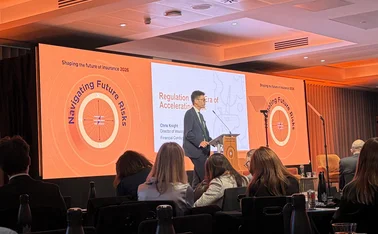
Chris Knight, director of insurance at the FCA, has updated on the progress of its report into the take up of cyber insurance, and how the regulator has to keep pace with technological advancements.

Growing FCA attestation appetite a warning for brokers
The Financial Conduct Authority has increased the level of attestation requests dished out to insurance firms in recent years, and the serious regulatory tool is one brokers need to keep a keen eye on according to compliance specialists.

Why insurer oversight cannot become another regulatory box-ticking exercise
With regulatory workloads continuing to grow and the FCA maintaining its focus on customer outcomes, Insurance DataLab co-founder Matt Scott explains why brokers need a practical, evidence-led approach to insurer oversight.

FCA cancels insurance distribution business’ permissions
The Financial Conduct Authority cancelled Professional Liability Network’s permission to carry out regulated activities on 11 September 2026.