

Brokers need to be ready for clients armed with ‘data dump’ ChatGPT presentations

Independent brokers need to distinguish themselves and respond quicker than ever in the soft market to have a chance of winning new clients. And they must be ready to manage the expectations of customers using large language models to do their own insurance fact finds.
That was the consensus among Michelle Haigh, broking director at Caunce O’Hara Insurance Brokers, and Ian Evans, a director at DPI Insurance, during the session Winning business when everyone is competing at last week’s Broker Expo Roadshow in Manchester.
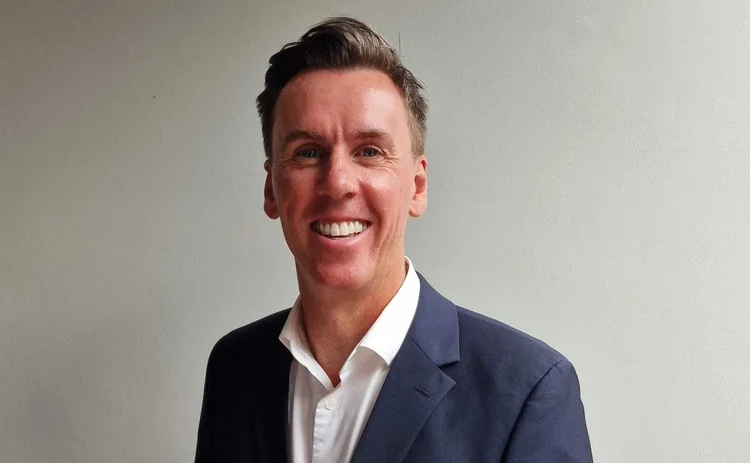
Evans, pictured, used the example of a seaside English café he visited in the summer with a full Thai menu that no one was eating from to illustrate that diversification in and of itself does not guarantee business.
He explained: “The message is that having the product alone is not enough. The customer journey needs to be right. So ask yourself is your marketing and website relevant to the sector you are going after?
“Is the service you are delivering a joined up one? Does everyone deliver the same service, or are they doing their own thing?
“If it is a sector you are going after, are the nuances specific to that sector in terms of cover requirement? It is about assessing your customer journey to add value at all junctures – and making sure you can give that customer absolute confidence in the purchase.”
Working harder
Asked whether clients distinguished between using independent and larger brokers when deciding which avenue to follow, Haigh responded: “When you are looking at your larger customers, they can be [better] educated on the market and know how things work a bit more. But there is a place for both. Some clients are better suited to an independent, and some to a national.”
Evans added: “Sometimes the independent might have to work a little harder. You might not have some of the breadth of buying power as some of the very large brokers; but you can absolutely deliver on premium and service.
If you have strong relationships with certain markets and they are going to pick up the phone, have a dedicated underwriter, and can turn it around quickly, that’s a massive help
Ian Evans, DPI Insurance
“And where we find smaller brokers can help is if the risk falls outside of the norm. Some of the larger brokers have placing strategies that they have to fall in line with – whereas an independent can go to an MGA or whoever they see fit to make that risk work for a client and get the right outcome.”
Composites versus MGAs?
A member of the audience asked the panel whether they were finding composites or MGAs more helpful in winning new business.
Haigh commented: “It is a mixture and it depends on the risk; we need both of them as you can’t rely on one.
“But quite often MGAs can be more flexible, nimble and quicker and that can work in their favour. Especially when you are under time pressure and have to get something over the line quickly. But there is a time and place for both.”
Evans commented: “It often depends on the size and nature of the risk. If it is e-traded there could be a whole host of insurers [that want it] and it is the [company] that delivers the best service first [which wins].
“And if that is enough to get you to the point to pick up the business, then so be it.
“It is a big differentiator with insurers; all brokers have different relations, but if you have strong relationships with certain markets and they are going to pick up the phone, have a dedicated underwriter, and can turn it around quickly, that’s a massive help. Especially given the time pressures we face.”
Soft or hard market for winning business?
Another delegate asked the panel whether it was easier to win new business in a soft or hard market.
It is probably more difficult at the moment in the soft market, said Haigh, “because there is so much competition and everybody is fighting for new business at the minute, which brings it own challenges”.
Evans continued: “I agree it is harder to acquire business now in the softer market.
“Because you don’t have the position where even if the broker does a great job technically and makes a saving for the client, it is not always as easy to defend in a harder market.
“In this [softer] market it takes one phone call and the premium has dropped lower than [it was], so if that client apathy creeps in and it is the same price [they will often go with it]. I would take a hard market for new business acquisition all day.”
The panel also debated whether insurance was less sticky than before.
Evans commented that most “high operating brokers” have retention of mid to high 90s, adding “that does not indicate less stickiness or less loyalty”.
However, he did concede the tools available in prospecting new business had expanded from traditional avenues of personal recommendations and telesales, noting that DPI now used online pay per click, organic searches, and had even had clients come through LLMs such as ChatGPT and Claude.
He continued: “The biggest changes are the demands from the customer in terms of the timescales. In days of old it would have been reasonable to wait a week or two for a quote – or something of that nature.
“Now people expect it same or next day, two days’ time. And this is not on particularly small risks; this could be with multimillion pound turnover companies.”
Unhelpful ChatGPT presentations
The panellists admitted they are also finding clients are using online information to research and prepare for broker conversations. And that this was not necessarily beneficial.
Haigh said: “They can only glean so much information that is online, so you need to guide them through things like the emerging risks coming up, gaps in cover, factors like that. Underinsurance, that needs a proper conversation with a broker; they are not going to get that online.”
Evans added: “I have seen it where occasionally clients are coming to us with their own ChatGPT-generated presentations, which is worrying because when we have looked at them, and applied it to our own fact find process to validate [it], some of the information [does not stack up].
“You can look at a building online, but it is not the construction they are seeing – it is what ChatGPT is generating. And there can be an occasional bit of friction with clients where we are saying we need to speak to you and [gather information] from your feedback, not from ChatGPT.
“It can also feel a bit like data dumping. You can get these very elongated wordy [LLM-generated] presentations that are a challenge to work with.”
Join the debate: Sign up to attend the Broker Expo on 8 October at the Birmingham NEC
Only users who have a paid subscription or are part of a corporate subscription are able to print or copy content.
To access these options, along with all other subscription benefits, please contact info@insuranceage.co.uk or view our subscription options here: https://subscriptions.insuranceage.co.uk/subscribe
You are currently unable to print this content. Please contact info@insuranceage.co.uk to find out more.
You are currently unable to copy this content. Please contact info@insuranceage.co.uk to find out more.
Copyright Infopro Digital Limited. All rights reserved.
As outlined in our terms and conditions, https://www.infopro-digital.com/terms-and-conditions/subscriptions/ (point 2.4), printing is limited to a single copy.
If you would like to purchase additional rights please email info@insuranceage.co.uk
Copyright Infopro Digital Limited. All rights reserved.
You may share this content using our article tools. As outlined in our terms and conditions, https://www.infopro-digital.com/terms-and-conditions/subscriptions/ (clause 2.4), an Authorised User may only make one copy of the materials for their own personal use. You must also comply with the restrictions in clause 2.5.
If you would like to purchase additional rights please email info@insuranceage.co.uk
More on Insight

FCA alerts of MGA capacity backer clone
The Financial Conduct Authority has issued a warning of a clone posing as Accelerant Insurance UK.

People Moves: 19 – 23 October 2026
Stay in the loop with the latest insurance personnel moves.

Lords Committee demands FCA goes further and faster on home, travel insurance
The cross-party House of Lords Financial Services Regulation Committee has urged the Financial Conduct Authority to go “further and faster in implementing and enforcing its rules on home and travel insurance” as it warned the Consumer Duty has not yet led to improvements.

Allianz teams up with Superscript on SME commercial insurance
Allianz UK is set to provide capacity for digital insurance broker Superscript’s landlord and tradespeople propositions.

Acrisure recruits ex-Cobra boss Tedstone as UK Retail CEO
Acrisure has appointed former Cobra Network leader Andy Tedstone as CEO of UK Retail, to take up the role after the departure of Mark Mcilquham this summer.

Markerstudy to cut 80 jobs
Markerstudy is set to axe around 80 roles across the group, as it evolves its operating model.

FSCS opens for claims from customers of failed broker Anthony Jones
The Financial Services Compensation Scheme has opened to claims from customers who paid for insurance through collapsed broker Anthony Jones (U.K.) but find themselves without the relevant cover and unable to recover the premiums by other means.

UK commercial softening approaching three year mark – Marsh
UK commercial market rates softened by 8% in the third quarter, maintaining the rate seen throughout the year and the eleventh quarterly drop in a row, according to Marsh.