

Beyond the balance sheet – what makes a great brokerage today?

Broker Expo 2026 Countdown: Financial performance remains critical, but today’s most successful brokerages are increasingly defined by far more than turnover alone. Saxon East investigates this topic ahead of a panel session at the event.
Shona Robertson knows the value of keeping an open office door for customers.
She’s had people come in cold and, off the bat, offer a few hundred thousand in business with H&R Insurance Services.
“They literally just walk in off our counter. Now, if we had a locked door, then we just wouldn’t be getting that,” the broker’s partner says.
The hidden cost of efficiency
Roger Gaunt is also an advocate of having deep roots in local communities.
In his view, the antithesis of local broking is having the business moved to national centres of excellence.
The idea is to improve efficiency and give clients access to specialists who would not sit in every branch.
But the Gauntlet executive director says: “I just don’t think that gives the customer the right level of service.”
Instead, local brokers should know about new developments, local geography and all the things that add value to the service.
Local knowledge
They can use this local knowledge to service a wide cross-section of products.
Gaunt explains: “That’s the sort of thing the clients love – that personal knowledge, that little bit of local intuition. You don’t get that from these call centres that are a long way away.”
Robertson sees another efficiency trend taking place: brokers reducing claims teams and outsourcing the work.
She strongly disagrees with this approach, believing H&R’s in-house claims team, with its intimate understanding of customers, is invaluable to its reputation.
“That’s what brings you your goodwill. That’s what creates the good experience. It can bring clients back.”
Value you can’t measure
What makes a great brokerage often consists of things that are difficult to measure on a balance sheet – customer service among them.
Neal Lumb, group sales and marketing director at Verlingue, explains it introduced a rule for staff to call first on anything complex or ambiguous.
He says clients fed back that ‘in a world where it’s getting more impersonal. It’s really nice that you guys call and then back it up in writing’.
Building this type of close relationship with the customer is so important in being a great broker, says Gaunt.
“When a customer’s comfortable, they’re probably more likely to open up, to talk, to engage, and actually that develops the long-term relationship. And so they are more likely to renew.”
Culture eats strategy
One of the biggest factors in what makes a great brokerage, which is hard to define in numbers, is its people and culture.
John Warburton, CEO of Konsileo, says: “In broking, value is created at the front line. It’s the broker, sitting with a client, who understands the risk and earns the trust. Everything else in the organisation exists to support that, or it shouldn’t exist at all.”
For Warburton, that means putting power in the hands of the broker.
“The job isn’t to control brokers from the centre. It’s to empower and support real brokers to do what they already know how to do.”
At Verlingue, that emphasis on people extends to giving staff a clear vision of their role and career path.
The broker has more than 30 apprentices among its 220 staff, with clear opportunities for progression.
Lumb says: “What it enables us to do is get them into our way of thinking, get them into our culture, get them to understand that, look, you’re going to have a great career here.”
No short-term financial horizons
As a family-owned business, Lumb says Verlingue is also not dictated by short-term financial horizons. Staff can feel part of a ‘great legacy’.
“That is one of the key cultural differences for us in being independent rather than PE-owned.”
Gaunt makes a similar point when asked what he would never cut when looking at the spreadsheet. He doesn’t hesitate: staff training and education.
“That is part of the finances that just does not need to be touched.”
Every member of staff, he believes, should be encouraged to study, take their insurance qualifications and build a genuine career path – more skilled work, better reward and a clear route forward.
“It’s quite a cliché to say look after your staff and they’ll look after your customers. But it really is the piece that doesn’t need to be cut out of the equation.”
Service first, finances follow
Warburton concludes that having the right culture and customer service is the bedrock for a healthy balance sheet.
“Financial performance follows from getting this right; it doesn’t come first. A brokerage that’s only managing its P&L is managing the symptom.
”The ones building lasting value are investing in the front line, the culture around it and the technology underneath, because that’s where the value actually comes from.”
Join the debate: Sign up to attend the Broker Expo on 8 October at the Birmingham NEC
The session ‘Beyond the balance sheet – what makes a great brokerage today?’ takes place at 11:00am – 11:30am on the C-Suite stage
Only users who have a paid subscription or are part of a corporate subscription are able to print or copy content.
To access these options, along with all other subscription benefits, please contact info@insuranceage.co.uk or view our subscription options here: https://subscriptions.insuranceage.co.uk/subscribe
You are currently unable to print this content. Please contact info@insuranceage.co.uk to find out more.
You are currently unable to copy this content. Please contact info@insuranceage.co.uk to find out more.
Copyright Infopro Digital Limited. All rights reserved.
As outlined in our terms and conditions, https://www.infopro-digital.com/terms-and-conditions/subscriptions/ (point 2.4), printing is limited to a single copy.
If you would like to purchase additional rights please email info@insuranceage.co.uk
Copyright Infopro Digital Limited. All rights reserved.
You may share this content using our article tools. As outlined in our terms and conditions, https://www.infopro-digital.com/terms-and-conditions/subscriptions/ (clause 2.4), an Authorised User may only make one copy of the materials for their own personal use. You must also comply with the restrictions in clause 2.5.
If you would like to purchase additional rights please email info@insuranceage.co.uk
More on Broker

Kidderminster broker buys Momentum AR
Momentum Broker Solutions appointed representative Atticus Insurance has acquired a fellow AR Leading Edge with founder Luke Jones teasing further deals.

Lucida confirms ex-Allianz PL boss George exit
Former Allianz personal lines broker boss Nicola George has left her post as group chief underwriting officer of Lucida Group after less than a year, the business has confirmed.

People Moves: 12 – 16 October 2026
Keep up to date with the latest personnel moves in insurance.

Howden unveils pet insurance product with MGA partnership
Howden has launched into pet insurance in partnership with Uris Group, offering access to a range of cover levels designed to help protect clients’ pets and manage unexpected veterinary costs.

Seventeen expands in Lloyd’s and London market with latest deal
Seventeen Group has bought Dashwood Brewer & Phipps, labelling the deal as “transforming” its Lloyd’s and London market capabilities.
Blog: Consistency could be the next big differentiator for insurers
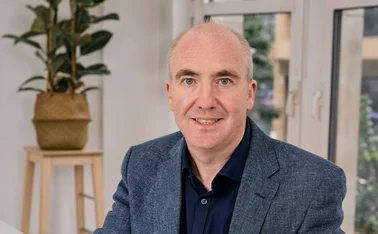
John Dunn, managing director of Brokerbility, argues insurers willing to focus on relationships that deliver reliable and consistent positive experiences have a significant opportunity to become a partner that brokers actively want to do more business with.
Scottish broker switches to AR model as it hits 50 years
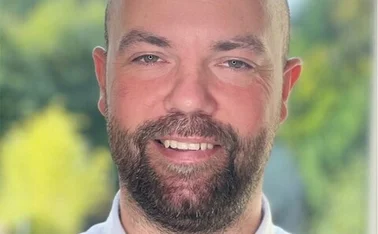
Antony Murray has told Insurance Age why the Scottish broker E G Murray moved to being an appointed representative and what its plans are moving forward.

Which? demands ban on brokers charging high motor APRs
Which? has named and shamed motor insurance brokers charging high interest rates on monthly policies and called for a ban on the practice.