

This article was paid for by a contributing third party.

The future of SME and mid-market broker trading
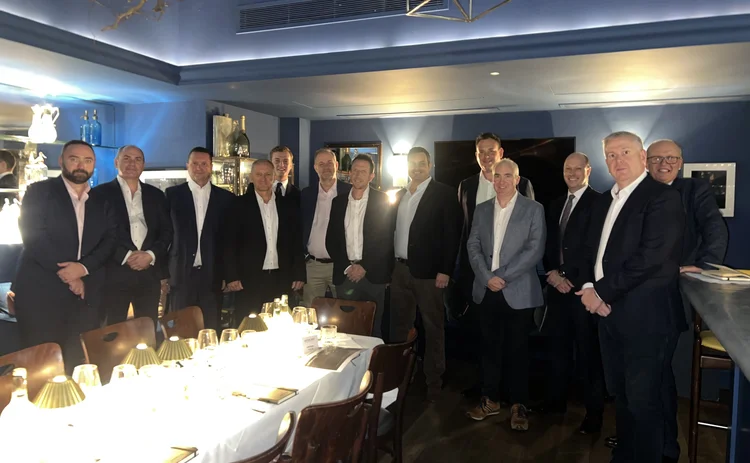
At a recent roundtable hosted by Insurance Age in partnership with Eaton Gate, leading brokers examined how digitalisation, e-trading and MGAs are reshaping SME and mid-market trading.
The discussion focused on the tension between e-trading and specialist underwriters, and what this means for brokers’ local relationships and the value of personal expertise.
The consensus was that the pandemic marked not a pause but a reset. Service standards, distribution models, and risk appetites have been reshaped. MGAs are now central to market operations, digital trading continues to reveal both its strengths and limitations, and broker confidence hinges on expertise, authority and innovation. Five key themes emerged from the discussion.
Roundtable participants:
- Simon Mabb, head of UK regions, Assured Partners
- Duncan Pagan, consultancy services director, Hedron Network
- Robin Thomson, MD, Jensten
- John Dunn, MD, Clear Group
- Daniel Searle, broking and markets director, Verlingue
- Nick Hopkin, strategic development director, The Broker Investment Group
- David Haddock, head of digital insurer partnerships, Everywhen
- Geoff Parrish, director, PSC UK Insurance Brokers (Everywhen)
- James Roberts, head of portfolio management, Specialist Risk Group
- Gareth Hughes, director of UK broker distribution, Eaton Gate
- Paul Hanwell, chief underwriting officer, Eaton Gate
- Jonathan Matthews, CEO and co-founder, Eaton Gate
- George Dalton, business development executive, Eaton Gate
Service after Covid: the new normal
Nearly three years on from the disruption of Covid, brokers agree that insurer service levels have not returned to their old benchmarks – nor should they be expected to. What has emerged instead is a “new normal”, with models reshaped by cost pressures, digitalisation and changing appetites.
For Duncan Pagan of Hedron Network, this shift is permanent. “Service is back to where insurers want it to be – but not where it was. We won’t be going back, we’ll be moving forward.”
Others described how new digital tools have reshaped SME service in particular. John Dunn at Clear Group noted that the expansion of e-trade appetite has opened fresh opportunities for MGAs: “They’ve stepped in to offer the human underwriting support brokers still want.”
Competitive pressures are also playing a role. Simon Mabb of Assured Partners argued that insurers can no longer rely on pricing alone: “The big players have realised they haven’t got it all their own way. They’re having to evolve.”
Some progress is visible. Eaton Gate’s Paul Hanwell described a “mixed bag” across the sector: certain carriers have invested in improving response times and referral points, while others remain patchy.
Service is back to where insurers want it to be – but not where it was. We won’t be going back, we’ll be moving forward.
Duncan Pagan, consultancy services director, Hedron Network
What unites the strongest performers, according to David Haddock of Everywhen, is their willingness to treat service as an ongoing project. “You can’t just build a product and leave it,” he said. “The key is to learn and evolve.”
The picture that emerges is not of a market in decline, but of one in transition. Service is no longer measured against a pre-Covid baseline; instead, insurers, MGAs and brokers are negotiating new expectations around efficiency, relationships and consistency.
MGAs: from margins to mainstream
If insurers have recalibrated around efficiency, MGAs have seized the space where service, relationships and agility still matter. Once seen as a last resort, MGAs are now core to brokers’ strategies.
Daniel Searle of Verlingue stressed their ability to offer what digital systems lack: “MGAs provide the relationships and decision-making you just don’t get with a chatbot.”
For Pagan, the attraction is their responsiveness: “They’re filling the gaps insurers are leaving – and once those relationships are in place, they’re hard to dislodge.”
Nick Hopkin of The Broker Investment Group highlighted cost dynamics: “It’s cheaper for insurers to hand capacity to an MGA than to write the business themselves. That makes the model sustainable.”
Others focused on mindset. Mabb contrasted insurers’ activity measures with MGAs’ commercial drive: “Insurers talk about how many quotes they’ve done. MGAs talk about what they’ve converted.”
Haddock pointed to product development: “Most of the innovative products of the last decade have come from MGAs, not composites. Agility and appetite drive that.”
And MGAs are not just servicing risks but also training the next generation. Gareth Hughes of Eaton Gate explained: “We give our staff exposure to every case. That way they build the judgment to handle the grey areas.”
The collective view was clear: MGAs are no longer on the sidelines. They are a permanent, and in many ways leading, part of the market’s structure.
Digital trading: between efficiency and relationships
Digital trading dominated the conversation, with brokers acknowledging its efficiency but voicing concern about the gaps it leaves.
Hopkin argued that insurers’ “digital-first” approach creates a structural void: “There’s a big gap in the middle – between £5,000 and £15,000 premiums – where MGAs step in.”
Rigid thresholds exacerbate the issue. Haddock described the frustration when carriers refuse to consider risks under £10,000: “If the system can’t handle it, you’re stuck. That’s where MGAs find opportunity.”
Dunn noted that many carriers struggle internally too: once a risk is declined, it can’t always be referred to another division. “They know it’s a problem, but they’re still working on solutions.”
For James Roberts at Specialist Risk Group, reliance on digital-only models is risky as the market softens: “If digital isn’t delivering premium, composites will have to shift more back into personal teams – but do we have the service models for that?”
The limits of automation are felt on the ground. Geoff Parrish at PSC UK Insurance Brokers warned: “If a chatbot exchange isn’t captured properly in the facts, it leaves brokers exposed.”
Many called for hybrid models. Pagan suggested a better “off-ramp” for brokers: “We need the ability to step off the digital journey, check the cover, and rejoin. That’s what gives certainty.”
For Robin Thomson at Jensten, the real value of digital is the data it generates: “The information on what referred, what declined, and how pricing compares is powerful for shaping strategy.”
But for Roberts, the craft of broking risks being lost: “Typing into a system and waiting for a reply isn’t why we come to work. The conversation is what makes this business.”
Even digital advocates saw the need for balance. Haddock insisted e-trade should be treated as a tool, not an ideology: “The question isn’t whether it’s digital or manual – it’s whether it delivers a solution.”
We give our staff exposure to every case. That way they build the judgment to handle the grey areas.
Gareth Hughes, director of UK broker distribution, Eaton Gate
Authority and expertise: training the next generation
Another concern was whether underwriting authority is being matched with expertise. Several brokers suggested it is not.
Hopkin argued that more authority doesn’t mean more expertise. “Technical quality has been watered down, and too many underwriters still refer up the chain.”
Roberts linked this to cultural change: “Younger staff aren’t learning from experienced colleagues in the way they once did. Authority is being extended, but without the grounding.”
Jonathan Matthews of Eaton Gate added that caution often prevails: “If you don’t have the confidence to make the decision, it’s easier to say no.”
Dunn noted that MGA teams often spend more time in the office, benefitting from direct exposure to each other’s decisions. Parrish summed it up crisply: “You trade with people, not with a name.”
Unless insurers rebuild technical depth and visibility, brokers suggested, MGAs will continue to hold the advantage in both responsiveness and talent.
Innovation and the future of risk
Looking ahead, the roundtable turned to product development, claims, and the challenges of insuring a more complex economy.
Haddock argued that MGAs have led the way: “If you’ve seen innovative product in the last decade, it’s more likely come from an MGA.” Thomson agreed: “They move faster when they see opportunity.”
For Mabb, innovation must cover the whole life cycle, not just underwriting: “Claims are the shop window. MGAs have upped their game here, and brokers are watching capacity quality and claims outcomes closely.”
AI could eventually handle more complex cases digitally. But for now, you still need an underwriter to understand diversification in what clients do.
Daniel Searle, broking and markets director, Verlingue
Hanwell emphasised consistency as a differentiator: “Insurers can change appetite overnight with an algorithm tweak. MGAs are more stable, and that builds partnerships.”
The brokers gave examples where MGAs are stepping in: leisure and hospitality, construction trades, unoccupied property, and risks with claims histories but improved management.
Searle pointed to technology as the next frontier: “AI could eventually handle more complex cases digitally. But for now, you still need an underwriter to understand diversification in what clients do.”
Roberts suggested parametric products may emerge, while Hanwell reminded the group that client diversification itself creates complexity: “Commercial insurance is never simple. As businesses diversify, less and less fits the sausage machine.”
Pagan noted: “Insurers could learn from the MGA trading mentality – finding a way to write the risk, rather than just saying no.”
Conclusion: from service to capacity
By the end of the discussion, the direction of travel was clear. Brokers are increasingly using MGAs – not just tactically, but as a central part of placing SME and mid-market business.
“Yes, we’re trading more with MGAs,” said Mabb. “The reason is service – speed of access, contact with underwriters, the ability to have a real conversation when you need one.”
Dunn agreed, adding a note of selectivity: “We’re being careful about which MGAs we partner with, but they’re taking a bigger share.” Thomson highlighted ease of agency management, while Haddock stressed the attraction of agility and direct access to decision makers.
Crucially, brokers emphasised that relationships matter. When a digital system declines a risk, MGAs and insurers who can provide fast, knowledgeable, locally based underwriters make the difference between a lost opportunity and a successfully placed policy. Expertise, responsiveness and established connections are becoming as important as the technology that supports trading.
The pandemic did not just disrupt service – it accelerated a structural reconfiguration. MGAs are no longer supplementary, they are mainstream players shaping service, innovation and expertise. Their growing role demonstrates that in SME and mid-market trading, human judgement and digital tools must coexist, each applied where it delivers the most value.
Sponsored content
Copyright Infopro Digital Limited. All rights reserved.
As outlined in our terms and conditions, https://www.infopro-digital.com/terms-and-conditions/subscriptions/ (point 2.4), printing is limited to a single copy.
If you would like to purchase additional rights please email info@insuranceage.co.uk
Copyright Infopro Digital Limited. All rights reserved.
You may share this content using our article tools. As outlined in our terms and conditions, https://www.infopro-digital.com/terms-and-conditions/subscriptions/ (clause 2.4), an Authorised User may only make one copy of the materials for their own personal use. You must also comply with the restrictions in clause 2.5.
If you would like to purchase additional rights please email info@insuranceage.co.uk