

This article was paid for by a contributing third party.

Roundtable: High noon in commercial combined’s ‘Wild West’
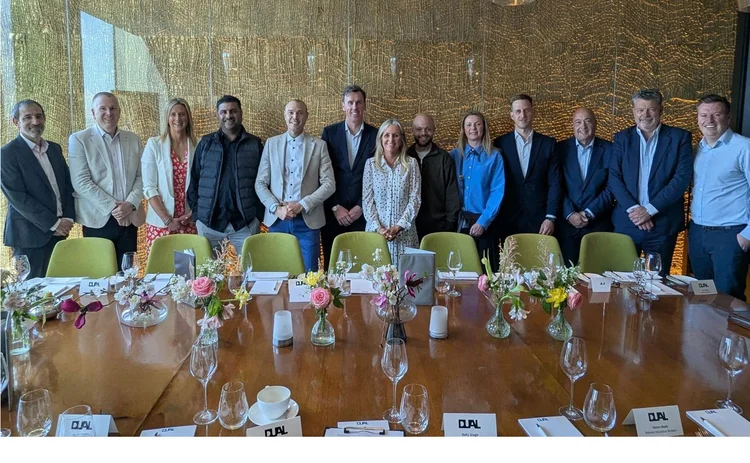
Brokers say falling premiums may look like easy pickings, but erratic insurer appetite and patchy service may mean a painful reckoning ahead. Martin Friel reports
Attendees
- Malcolm Cooke, managing director, C&C Insurance Brokers
- Ryan Willis, deputy broking director, Verlingue
- Simon Mabb, managing director, Romero Insurance Brokers
- Ian Evans, director, DPI Insurance
- Bally Singh, client director, Konsileo
- John Batty, director of technical services, Bridge Insurance Brokers
- Stephen Campbell, head of broking, Vista Insurance Brokers
- James Baskeyfield, broking director, Howden Manchester
- Matt Stuttard, regional managing director, North, JMG
- Clare Leigh, broking manager, Abbott & Bramwell (DR&P Group)
- Janine Packman, director, Tricketts Insurance Brokers
- Moira Spencer, regional manager, North West, DUAL
- James Ramira, managing director, regional P&C and social care, DUAL
Commercial combined insurance is the bread and butter of many broking businesses, and the latest etrading data from Acturis suggests the UK SME commercial combined market became steadily softer throughout 2025, with average premiums 2% lower year on year in Q4, the third consecutive quarter of rate decline.
These softening conditions were front of mind for brokers attending an Insurance Age roundtable event in Manchester, held in partnership with DUAL. Although a range of issues were covered, attendees were clear on one point – lower premiums are a positive for clients, but there is concern over the sustainability of pricing and the impact of the inevitable correction.
Racing for territory
“It’s like the Wild West and we are struggling to get a hold of underwriters on a lot of smaller risks, but with the larger ones, everyone is all over them,” said Malcolm Cooke, MD of C&C Insurance Brokers.
John Batty, director of technical services at Bridge Insurance Brokers, agreed saying the trend started at the beginning of 2025 with the arrival of a host of new entrants in the North West.
“Some of the more London-centric insurers have moved in and the aggressiveness of those organisations to write business in our area has had a competitive impact on other insurers and that has trickled down South,” he argued.
While underwriters are hungry for regional risks, Moira Spencer, regional manager for the North West at DUAL, explained that this created its own challenges for insurers: “Trying to find experienced people can be difficult as there is so much competition for good underwriters at the moment.”
This is a market defined by underwriters under pressure to hit internal targets and as Claire Leigh, broking manager at Abbott & Bramwell, described it, insurers are “throwing the kitchen sink” at risks in a bid to win them.
Despite the new appetite in the market, Batty said that underwriters were assessing risks as though they were still in a hard market, looking for detail on every line of the schedule, a point picked up by Matt Stuttard, regional MD for the North at JMG.
“I think there has been a challenge with underwriters and insurers getting comfortable with the fact we are in a different market, and that they need to be more flexible on rates,” he argued.
How long will the boom last?
While there was agreement that this dash for commercial combined was generally a positive development for clients, there were concerns that competition was moving faster than underwriting discipline as Bally Singh, client director at Konsileo, pointed out: “There is a risk that books are going to get burnt, and then there’s going to be a correction or even an over-correction and I think that is the biggest risk at the moment,” he said.
It was argued that these fluctuations in appetite make it difficult for brokers to explain the rationale to clients, eroding hard-won trust.
There is a risk that books are going to get burnt, and then there’s going to be a correction or even an over-correction...
Bally Singh, Konsileo
“Continuity for the client is important because you don’t want to be in a situation where a risk has moved because a certain insurer has widened their appetite, only to find in two years’ time it’s back out of appetite. It’s not an ideal situation,” said Stuttard.
That trust is also being challenged by the service levels provided by insurers, an issue that has been a bugbear for brokers since the pandemic, particularly when it comes to etrade.
“A couple of insurers were celebrating – post-Covid – the amount of business that went down the etrade route, but I thought that was a failure of our industry. One composite said etrade had increased 73% but my view is that is probably because nobody could get hold of an underwriter,” said Batty.
Holding the line
While increasingly larger risks are being traded online, Ian Evans, director at DPI Insurance, pointed out that the complexities of many risks aren’t being taken into account.
“I think that can be the downfall of etrade sometimes, where we are using drop-down menus when we should be having an underwriting conversation,” he said.
Batty pointed out that retailers might comprise a convenience store, a post office, a souvenir shop and newsagents, all in one location: “There isn’t an etrade system in the world that can accommodate all those business descriptions, so I’m looking forward to the day where AI can take a manual presentation and the insurer has to force it through etrade themselves.”
And as Stephen Campbell, head of broking at Vista Insurance Brokers, highlighted: “You can actually spend more time processing an etraded risk than a manual one, so sometimes it just not cost effective for us.”
One issue with etrade is that not all products are created equal, something Simon Mabb, MD of Romero Insurance Brokers, highlighted: “It could be the same insurer, but the wording can be significantly worse on etrade, so you end up providing the client with an inferior product.”
The best results, as Evans pointed out, often come when the insurer takes a hybrid approach: “When you know there are some complexities, if there is access to a senior underwriter to have a conversation, we can make it fit into etrade.”
There seems to be movement in that direction with Ryan Willis, deputy broking director at Verlingue, saying that he had seen an improvement in the level of etrade staff in the last few years: “When a case refers now, it does seem like there is easier access to an actual underwriter so you are more comfortable they have all the information.”
One key issue raised by brokers was a belief that insurers haven’t kept pace with changing client demands, with today’s buyers expecting quick decisions and turnarounds, something that brokers say insurers struggle to respond to.
“Insurers need to understand and reflect the fact we’re in a new world now. People don’t operate on the timescales that insurers want to operate on, and that’s why everyone sits around complaining about poor service,” said Evans.
Janine Packman, director at Tricketts, added: “The main issue is that the insurer service becomes a reflection of your own as a broker.”
People don’t operate on the timescales that insurers want to operate on, and that’s why everyone sits around complaining about poor service.
Ian Evans, DPI Insurance
Where MGAs make their stand
Having highlighted the many frustrations experienced working with insurers, the conversation moved on to managing general agents (MGA), exploring whether they fare any better in this newly competitive market.
“We’ve seen issues on claims, and the fact that they rely on insurer capacity plays an important part in their claim service. They’re being driven by the fact they don’t want to lose that capacity, so they’ll be strict on claims,” said Batty.
But the performance of the MGA sector during and immediately after Covid was viewed much more positively.
“They were answering phones and winning on service proposition. But as composites have pushed their underwriting rules to the very edges of their parameters, it is more difficult for MGAs to stand out,” said Stuttard.
DUAL’s James Ramira, managing director of regional P&C and social care, questioned why this would be the case when insurer service levels remain challenging.
The answer? It depends.
“People around this table have got some great relationships with insurers, and will get the level of service they require, but if you’re a smaller, independent, you might struggle,” Batty said.
After the goldrush
Despite all these challenges, attendees were able to identify some positives to come out of the feeding frenzy for commercial combined, with James Baskeyfield, broking director at Howden Manchester, saying that the increased appetite allows brokers to push for better cover.
I’m not going to 20 insurers because that’s just wasting everyone’s time.
Malcolm Cooke, C&C Insurance Brokers
“We can start pushing limits upwards and we can start to rectify some of conditions that were applied when the market was harder, and we can do it quite competitively,” he said.
Batty agreed, adding that, with the savings clients are making, his firm is encouraging them to secure new or broader cover for their businesses and to undertake proper valuations of their assets.
Or as Evans put it: “If you’re coming back to your client with a lower premium, it certainly becomes easier to upsell management liability or cyber.”
The new frontier
As the conversation drew to a close, attendees were asked what it would take to create the perfect market conditions. Leigh called for underwriters to pick up the phone rather than emailing, while Stuttard wished underwriters had greater autonomy to make decisions in those conversations.
For Cooke, the ideal situation would be having a clearer idea of the appetite of individual carriers: “I’m not going to 20 insurers because that’s just wasting everyone’s time.”
And that is where, according to Evans, MGAs can really differentiate themselves.
“You can see something is slightly out of the box, and that’s when you’re going to pick up the phone and use an MGA. There’s no point in MGAs trying to compete for vanilla property owners’ business – brokers need a reason to use them.”
Commercial combined may indeed be like the Wild West, but while brokers follow these rapidly evolving market developments, they are already looking over the horizon towards the consequences of actions that may make profit today, but will almost certainly result in client confusion and broker pain in the future.
Sponsored content
Copyright Infopro Digital Limited. All rights reserved.
As outlined in our terms and conditions, https://www.infopro-digital.com/terms-and-conditions/subscriptions/ (point 2.4), printing is limited to a single copy.
If you would like to purchase additional rights please email info@insuranceage.co.uk
Copyright Infopro Digital Limited. All rights reserved.
You may share this content using our article tools. As outlined in our terms and conditions, https://www.infopro-digital.com/terms-and-conditions/subscriptions/ (clause 2.4), an Authorised User may only make one copy of the materials for their own personal use. You must also comply with the restrictions in clause 2.5.
If you would like to purchase additional rights please email info@insuranceage.co.uk